A Helpful “Inside-Out” Sun Protection Supplemen
By Dr. Kamruz Darabi, Triple Board-Certified Dermatologist
Darabi Dermatology – Chaska and Hutchinson, MN
Key Takeaways
- What it is: Polypodium leucotomos extract (PLE) is a botanical antioxidant that protects skin from within.
- Primary Benefit: Reduces UV-induced DNA damage, inflammation, and pigment flares (Melasma).
- Crucial Note: It does not replace topical sunscreen; it adds an extra layer of protection (equivalent to SPF 3-4).
- Best For: People with Melasma, sun sensitivity (PMLE), or a history of skin cancer.
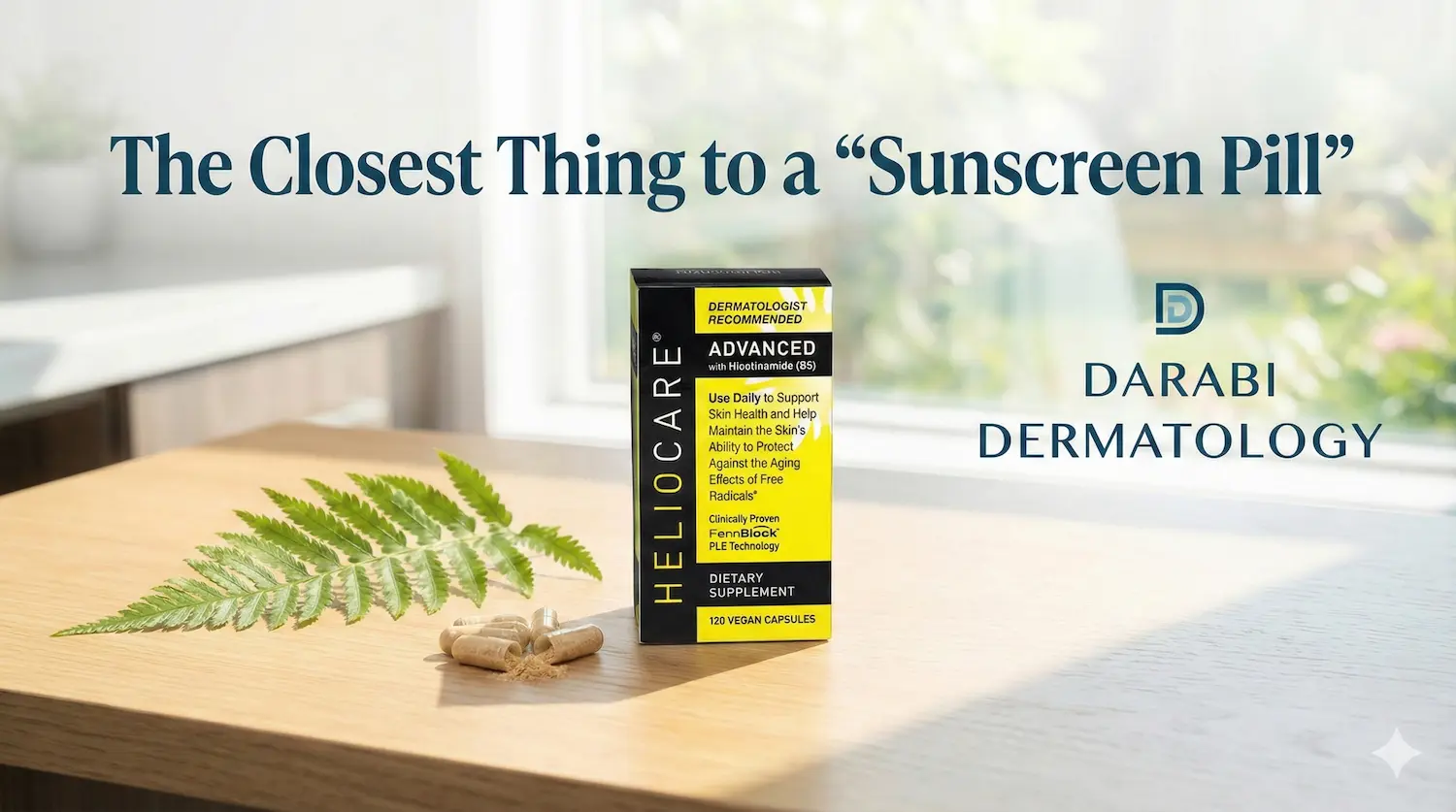
Sun protection is essential for preventing skin cancer, sunburn, and premature aging. While topical sunscreen remains the foundation, some oral supplements can strengthen the skin’s natural defenses. One of the most researched options is Polypodium leucotomos extract (PLE)—a botanical antioxidant taken as a capsule, commonly known by brand names like Heliocare.
What Is Polypodium Leucotomos?
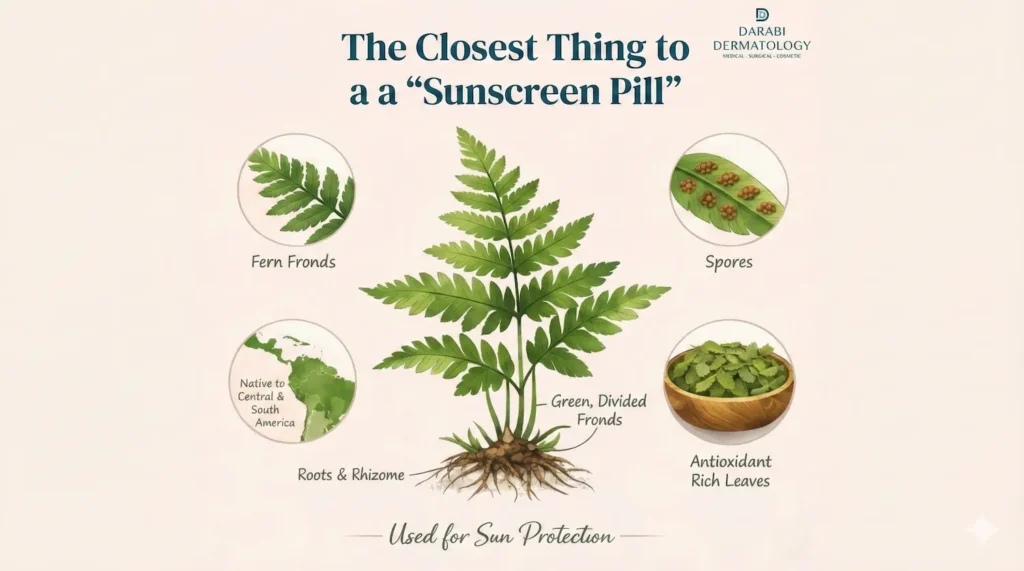
PLE is derived from a tropical fern and contains potent antioxidants. These compounds help protect skin cells from UV-induced damage, inflammation, and pigmentation changes.
Unlike sunscreen, which works on the surface (blocking rays), PLE works from within to support overall skin resilience against oxidative stress.
Benefits of PLE: Validated by Science
Studies show several helpful effects when PLE is used alongside traditional sun protection:
- Reduces UV Damage: Minimizes UV-induced DNA damage and cellular inflammation.
- Prevents Sunburn: Helps increase the skin’s resistance to burning (though it does not block UV rays entirely).
- Protects Collagen: Helps slow photoaging by preserving the skin’s structural proteins.
- Stabilizes Pigment: A useful add-on for patients with Melasma and dark spots to prevent flare-ups.
- Reduces Sun Allergies: Helps reduce flare-ups in sun-sensitive conditions like polymorphous light eruption (PMLE).
Who May Benefit?
We often recommend PLE as an adjunct therapy for:
- Individuals battling Melasma or hyperpigmentation.
- Those who burn easily or spend long hours outdoors (golfers, gardeners, hikers).
- Patients with a history of skin cancer seeking added protection.
- People with sun sensitivity or frequent rashes after UV exposure.
Comparison: Oral Supplement vs. Topical Sunscreen
It is vital to understand the difference between these two protective methods.
| Feature | Topical Sunscreen (SPF 30+) | Polypodium Leucotomos (PLE) |
| Mechanism | Blocks/reflects UV rays on the surface | Neutralizes free radicals from within |
| Protection Level | High (97%+ UVB blockage) | Low (Equivalent to SPF 3-4) |
| Primary Role | The Foundation of protection | A “Booster” or safety net |
| Replaces the other? | No | No (Must be used with sunscreen) |
How to Use It (Dosage)
- Typical Dosing: 240 mg taken 30 minutes before sun exposure.
- Duration: PLE has a relatively short duration in the bloodstream.
- Extended Exposure: For long days outdoors, dosing is typically repeated every 4 hours.
- Brands: While there are many brands, Heliocare® is the most widely studied and tested.
Important Note: PLE does not replace sunscreen. Its sun protective effects are roughly equivalent to an SPF 3-4. It works best combined with SPF 30+, protective clothing, and shade.
Is It Safe? (Side Effects & Safety Profile)
PLE is generally well tolerated with minimal side effects. Clinical trials and post-marketing safety reviews report no serious adverse events.
Potential mild effects
- Gastrointestinal: Stomach discomfort, nausea, or loose stools (rare).
- Headache: Occasional, generally mild.
- Skin Reactions: Itchiness is rare but possible in people with botanical sensitivities/fragrance allergies.
Contraindications
- Pregnancy/Breastfeeding: Research is limited; avoid use unless approved by your provider.
- Children: Studies are limited, though some dermatologists use it for pediatric PMLE.
Darabi Dermatology’s Bottom Line
Polypodium leucotomos is a safe and effective sun-protection booster, especially for patients with melasma, sun sensitivity, or increased skin cancer risk. It won’t replace sunscreen, but it can meaningfully enhance your overall sun-safety routine.
Interested in whether PLE is right for your skin? Our teams in Chaska and Hutchinson, MN, can help create a personalized plan.
Frequently Asked Questions (FAQ)
While often called a “sunscreen pill,” Polypodium leucotomos extract (PLE) does not replace topical sunscreen. It acts as an internal antioxidant that boosts your skin’s resistance to sun damage, providing protection roughly equivalent to SPF 3-4.
You should take the capsule approximately 30 minutes before sun exposure to allow the antioxidants to become active in your bloodstream.
Yes. PLE helps stabilize pigment cells and reduces inflammation, making it an excellent add-on treatment for preventing Melasma flare-ups caused by heat and visible light.
No. PLE is not a substitute for sunscreen. You must continue to wear a broad-spectrum SPF 30+ sunscreen, wear protective clothing, and seek shade.
The effects of PLE typically last for about 4 hours. If you are outdoors for an extended period, it is often recommended to take a second dose after 4 hours.
Yes, it is generally safe and beneficial for sensitive skin, especially for conditions like Polymorphous Light Eruption (sun allergy). However, rare reactions like itchiness can occur if you have botanical allergies.
Data on children is limited. While some dermatologists prescribe it for specific sun allergies in children, you should always consult a pediatrician or dermatologist before giving it to a child.
It is an “adjunct” preventative measure. By reducing DNA damage and inflammation, it supports the skin’s defense mechanisms, which is beneficial for those with a history of skin cancer, but it is not a standalone cure or total preventative.
Side effects are rare and mild but can include upset stomach, nausea, or headache. Most users tolerate it very well.
Due to limited research, it is generally recommended to avoid PLE supplements during pregnancy and breastfeeding unless specifically approved by your OB/GYN or dermatologist.