By Kamruz Darabi, MD, FAAD, FASMS Triple board-certified dermatologist, Mohs skin cancer surgeon, and dermatopathologist at Darabi Dermatology, serving Chaska and Hutchinson, Minnesota.
Basal cell carcinoma (BCC) is the most common form of skin cancer. It rarely spreads to other parts of the body, but left untreated, it keeps growing into surrounding skin and can invade deeper structures like nerves, cartilage, or bone. This is exactly why early, complete removal matters, even though the tumor itself may look harmless.
Key Takeaways
- Mohs surgery cures up to 99% of new basal cell carcinomas (BCC) and about 94% of recurrent ones—the highest rate of any BCC treatment.
- It’s an outpatient procedure done with local anesthesia; patients go home the same day.
- Cancerous tissue is removed in thin skin layers and checked under a microscope until margins are completely clear, so as much healthy skin as possible is preserved.
- At Darabi Dermatology, Dr. Darabi reads his own slides in an in-house dermatopathology lab, which keeps the entire process moving in real time.
- Mohs is generally recommended for BCCs on the face or other sensitive areas such as ears, lips, hands, recurrent tumors, or cancers with poorly defined borders.
What Is Mohs Micrographic Surgery for Basal Cell Carcinoma?
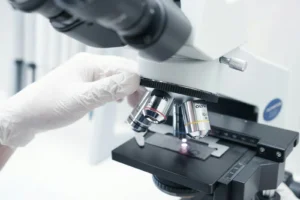
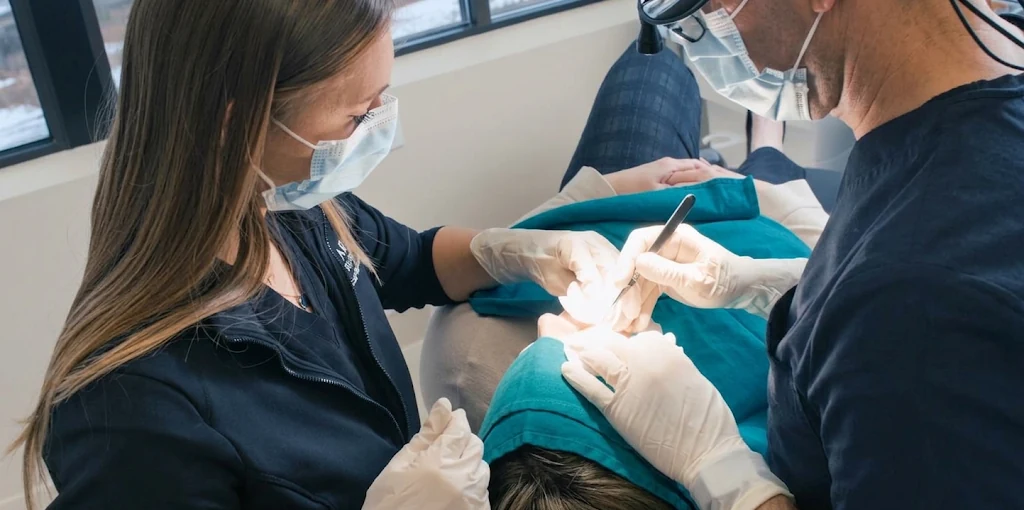
Mohs micrographic surgery, named for the physician who pioneered it, Dr. Frederic Mohs, is different from a standard excision in one key way: instead of removing the visible tumor plus an estimated large margin and sending it to an outside lab to be examined microscopically days later, the surgeon removes the tissue in thin layers and examines 100% of the deep and outer edges under a microscope immediately, while the patient waits. If any cancer cells remain, only that specific area is re-treated—not the entire site. The process repeats until the margins are completely clear of cancer.
What makes this especially efficient at our practice is that Dr. Darabi isn’t just a board-certified Mohs surgeon; he’s also a board-certified dermatopathologist who reads his own slides in our in-house dermatopathology lab.
According to the Skin Cancer Foundation, Mohs surgery is considered the gold standard for treating basal cell and squamous cell carcinomas, particularly in cosmetically or functionally sensitive areas such as the face, ears, lips and hands.
Who Needs Basal Cell Skin Cancer Mohs Surgery?
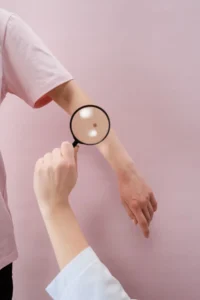
Not every basal cell carcinoma requires Mohs surgery—small, low-risk BCCs on the trunk or limbs can sometimes be treated with a simpler excision. But Mohs is generally the recommended approach when any of the following apply, and it’s worth having any new or changing spot evaluated so we can help you understand the warning signs of skin cancer and where your particular case falls.
High-Risk or Cosmetically Sensitive Locations
BCCs on the face, nose, ears, eyelids, lips, scalp, hands, feet, or genitals are prime candidates for Mohs because there is little extra skin to spare in these areas. Sparing healthy tissue here directly protects both appearance and function.
Recurrent or Previously Treated Tumors
If a basal cell carcinoma has returned after a prior treatment, Mohs offers the best chance of complete removal the second time, since 100% of the margin is examined rather than a sample.
Large, Aggressive, or Poorly Defined Tumors
Tumors that are large, fast-growing, have indistinct edges, or belong to more aggressive subtypes (such as infiltrative, micronodular or morpheaform BCC) often extend further than they appear on the surface. Mohs is uniquely suited to tracking down every microscopic extension.
How Effective Is Mohs Surgery for Basal Cell Carcinoma?
The numbers are the reason Mohs is considered the gold standard. Compared to other basal cell carcinoma treatments, the recurrence rate after Mohs is the lowest of any option:
| Treatment | Approximate 5-Year Cure Rate | Recurrence Rate |
|---|---|---|
| Mohs surgery (new BCC) | ~99% | 1–2% |
| Mohs surgery (recurrent BCC) | ~94% | 4–6% |
| Standard surgical excision | ~90–95% | 5–10% |
| Electrodesiccation & curettage | ~85–95%* | 7–8%* |
*Varies significantly by tumor size, location, and subtype.
Why it matters: According to NCBI, Mohs micrographic surgery has the highest cure rate of any treatment for basal cell and squamous cell skin cancers, precisely because it is the only technique that examines 100% of the surgical margin rather than a representative sample of a regular excision.
The Mohs Surgery Process, Step by Step
Consultation
At your consultation, Dr. Darabi evaluates the size, location, and subtype of your basal cell carcinoma and confirms Mohs is the right approach. Your medical history is reviewed to make sure you are a good candidate for surgery and any perioperative risk factors are accounted for to ensure a successful surgery and post-operative healing. The surrounding skin is examined and a plan is created for how to stitch the ensuing wound after removal. Linear closure, a skin flap, a skin graft or allowing the wound to heal on its own are the most common options for managing a skin wound after removal of the skin cancer.
Local Anesthesia and the First Layer
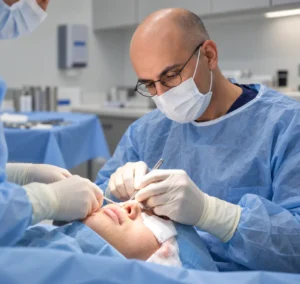
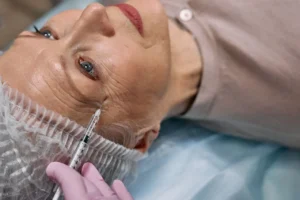
On the day of surgery, the visible tumor is identified and marked before anything is numbed. A local anesthetic numbs the area completely—you’ll be awake and comfortable throughout, and you can eat and take your normal medications beforehand. Dr. Darabi then removes the first, thinnest layer of visible tumor plus a small margin of normal appearing skin around it.
Microscopic Mapping, In-House
This is where our process differs from many practices. While you wait nearby, the tissue is processed and mapped, then examined under the microscope by Dr. Darabi himself, in our in-house dermatopathology lab. Because the surgeon is also the pathologist, there’s no tissue sent out and no wait for a second doctor’s read.
Additional Layers, Only Where Needed
If cancer cells remain anywhere along the margin, another thin layer is removed—but only from that specific spot, not the whole surgical site. This cycle repeats, typically taking one to one-and-a-half hours per layer, until the margins are completely clear. Plan on spending four to six hours at the office, since basal cell carcinomas are often larger beneath the skin than they appear on the surface.
Closure or Reconstruction
Once the cancer is fully removed, Dr. Darabi discusses the best way to close the wound (options range from letting it heal on its own to stitches to, for larger defects, reconstruction with a skin flap or a skin graft). Because Mohs is designed to spare healthy tissue, the resulting scar is typically smaller than what a wider, “estimated margin” excision would leave behind.
Recovery After Mohs Surgery for Basal Cell Carcinoma
Recovery from Mohs surgery is generally straightforward. Most patients experience mild swelling, bruising, or tenderness at the surgical site for one to two days. According to the Mayo Clinic, keeping the wound clean, moist, and protected (typically with an antibiotic or petroleum-based ointment and a fresh bandage) is key to healing well and minimizing scarring.
Day-After Surgery Tips:
- Rest and avoid strenuous activity for at least 24-48 hours, and longer if your surgery site is under tension (such as the back or scalp).
- Arrange a driver if your surgery is near the eyes; most patients drive themselves otherwise.
- Sutures are typically removed 7 to 14 days after surgery, depending on location.
- Call our office if you notice increasing redness, drainage, fever, or pain that isn’t controlled with over-the-counter medication—these can be early signs of infection.
Basal Cell Cancer Treatments: Mohs vs. Other Treatment Options
Mohs isn’t the only way to treat basal cell carcinoma, and Dr. Darabi will always recommend the option that fits your specific tumor. Standard surgical excision removes the visible tumor with a wider margin and the removed specimen is sent to a lab for confirmation afterward—effective for many low-risk BCCs, but it doesn’t offer the real-time, 100%-margin certainty of Mohs. Electrodesiccation and curettage (scraping and cauterizing the tumor) is a fast, low-cost option reserved for small, superficial, low-risk lesions on the trunk or limbs, but it carries a higher recurrence rate and no margin confirmation at all.
For certain older adults or patients who aren’t good surgical candidates, non-surgical options like superficial radiation therapy can be appropriate for select superficial BCCs. None of these alternatives, however, match Mohs surgery’s combination of the highest cure rate and the smallest possible wound—which is why it remains the recommended standard for BCCs in high-risk locations or with high-risk features.
Why Choose Darabi Dermatology for Mohs Surgery
Mohs surgery is only as good as the surgeon who is performing it and microscopically interpreting the removed tissue immediately. Dr. Darabi is one of very few dermatologists in the country, and the only one in Minnesota, triple board-certified in Dermatology, Mohs Micrographic Surgery, and Dermatopathology. That third certification is what sets our practice apart: rather than sending tissue to an outside pathologist, Dr. Darabi reads every slide himself in our in-house dermatopathology lab, so there’s no gap between the surgeon’s judgment and the pathologist’s diagnosis.
Patients also don’t have to wait months to get started. While many practices in the Twin Cities area have appointment backlogs of six to eight weeks or more, Darabi Dermatology typically sees new patients within one to two weeks—an important difference when you’re waiting to have skin cancer treated!
Schedule Your Mohs Surgery Consultation
If you’ve been diagnosed with basal cell carcinoma, you don’t have to wait months to get answers or treatment. Dr. Darabi and our team at our Chaska and Hutchinson offices offer new patient appointments within one to two weeks, comprehensive evaluation, and—because Dr. Darabi is both your surgeon and your pathologist—same-day certainty that your cancer is completely removed.
Frequently Asked Questions About Mohs Surgery for Basal Cell Carcinoma
Does Mohs surgery hurt?
No. The area is fully numbed with local anesthetic before any tissue is removed. You may feel some pressure or tugging, and mild soreness afterward that’s usually managed with over-the-counter pain relief.
How long does Mohs surgery take?
Plan on spending four to six hours at our office. Each layer takes roughly one to one-and-a-half hours to process and examine, and most basal cell carcinomas require one to three layers before the margins are clear.
Will I need a driver?
Most patients drive themselves home, since only local anesthesia is used. A driver is recommended if your surgery is near the eye or if a large bandage will affect your vision.
Will Mohs surgery leave a scar?
Yes, some scarring is expected with any skin cancer removal, but Mohs is designed to spare as much healthy tissue as possible, which typically results in a smaller scar than a standard wide excision. We also offer options to improve scar appearance afterward.
Is Mohs surgery covered by insurance?
Mohs surgery for a biopsy-confirmed skin cancer is typically covered by most major insurance plans, though coverage details vary. We recommend you check with your insurance any coverage restrictions and patient responsibilities such as deductibles, co-pays and co-insurance.
What’s the difference between Mohs surgery and a regular excision?
A standard excision removes the tumor plus an estimated wider margin and sends the tissue to an outside lab for confirmation several days after the surgery. Mohs examines 100% of the margin under the microscope in real time, during the same visit, so the surgeon knows immediately whether more tissue needs to come out or if the wound can be stitched.
How soon after diagnosis should I have Mohs surgery?
Basal cell carcinoma grows slowly, but it’s still best to schedule treatment within a few weeks of diagnosis rather than letting it go indefinitely, since tumors can grow larger and require more extensive surgery over time.
Can basal cell carcinoma come back after Mohs surgery?
It’s possible, but unlikely. The recurrence rate after Mohs is only about 1-2% for new tumors, the lowest of any BCC treatment. Regular annual skin exams afterward help catch any new or recurrent spots early.