By Kamruz Darabi, MD, FAAD, FASMS Triple board-certified dermatologist, Mohs skin cancer surgeon, and dermatopathologist at Darabi Dermatology, serving Chaska, Hutchinson, and the greater Minneapolis area.
The human eye inherently equates smooth, radiant skin with youth. As we age, and as our skin is exposed to the sun and pollution, the natural proteins that keep it firm start to break down. This leads to common signs of sun damage and aging: dark spots, wrinkles, and sagging skin.
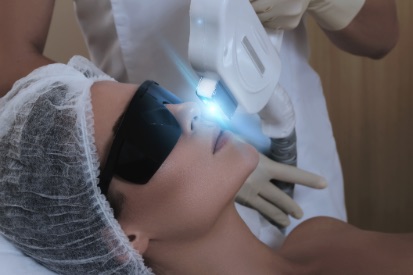
The medical term for skin damage caused by years of sun exposure is photoaging. Laser therapy improves it by sending gentle heat beneath the surface to trigger your skin’s natural healing process, helping it rebuild and rejuvenate from the inside out.
Today, advanced laser therapy for skin rejuvenation gives you a powerful, non-surgical alternative to smooth out imperfections and rebuild the surface layers of your skin.
Modern dermatological lasers use precise beams of light to zap away damaged cells or pigment while leaving the surrounding, healthy skin untouched. This triggers your body’s natural healing process, giving you results with predictable, manageable recovery times.
Whether you want to clear away broken blood vessels, erase years of stubborn sun damage, or smooth out superficial acne scars, this guide breaks down the best laser treatments so you can find the perfect match for your skin type.
Table of Contents
Ablative vs. Non-Ablative Laser Therapy
Vascular Correction With DermaV®
The Gold Standard for Structural Transformation: Skin Resurfacing CO2 Laser
Sub-Surface Cellular Renewal: LaseMD Ultra™
Laser Treatment for Hair Loss: LaseMD Ultra™ with KeraFactor™
Dermatologic Laser Therapy Options at a Glance
Critical Pre- and Post-Treatment Safety Rules
Selecting Your Clinical Rejuvenation Specialist
Frequently Asked Questions About Laser Therapy for Skin Rejuvenation
Ablative vs. Non-Ablative Laser Therapy
To choose the optimal path for dermal renewal, it helps to understand the two primary mechanisms of laser resurfacing:
Ablative Laser Resurfacing
Ablative lasers target intracellular water molecules, vaporizing thin, controlled layers of the outer epidermis while transferring thermal energy deeper into the underlying dermis. This controlled micro-injury triggers a wound-healing cascade, compelling the body to replace damaged surface cells and synthesize a network of new collagen and elastin fibers. While ablative protocols command a more intensive healing phase, they remain the gold standard for correcting structural irregularities, superficial wrinkles and pores, and superficial scars.
Non-Ablative Laser Renewal
Non-Ablative systems bypass the surface of the skin entirely. They project thermal energy through the intact epidermis to stimulate underlying dermal collagen synthesis without vaporizing or breaching the protective outer layer. Because the skin barrier remains entirely intact, these procedures entail minimal post laser recovery or social downtime and present a very low risk profile, making them excellent choices for proactive “prejuvenation,” pigmentary correction, and subtle superficial textural refinement.
1. Vascular Correction With DermaV®
When addressing conditions that involve vascular irregularities (redness) superficially and deeper in the skin a single wavelength often doesn’t reach superficial and deeper skin vessels. The DermaV laser resolves this limitation by integrating two gold-standard wavelengths into a single, highly adaptable treatment platform.
How the DermaV® Laser Works
The DermaV® system uses precise, integrated dual wavelengths to target superficial and deep structural targets within the skin:
- One targets small, visible blood vessels and surface-level pigment (like freckles or sunspots).
- The other goes deeper into the skin to treat larger blood vessels and reduce unwanted hair.
This combination makes DermaV® very flexible and effective for treating multiple skin issues.
Who Benefits From DermaV® Therapy
The DermaV® laser is an ideal choice for patients looking to clear up specific tone, vascular, or pigment issues. You are an excellent candidate for this treatment if you want to target:
- Broken blood vessels (on the face or chest)
- Redness from conditions like rosacea
- Brown spots (freckles, sunspots, age spots)
- Hair reduction on various parts of the body
Healing & Downtime
The non-ablative nature of the DermaV® laser ensures exceptional patient comfort. Patients typically experience mild, temporary redness and slight swelling resembling a mild sunburn, which resolves naturally within 24 to 48 hours. Social downtime following the treatment is minimal.
2. The Gold Standard for Structural Transformation: Skin Resurfacing CO2 Laser
Carbon dioxide laser resurfacing is used for more intensive skin renewal. CO2 lasers are considered the gold standard for treating superficial wrinkles, surface scars, pores, and rough skin texture. The Deka Tetra SmartXide laser is one of the most advanced versions available today.
How CO2 Laser Skin Resurfacing Works
CO₂ lasers remove very thin layers of skin using a beam of light that targets water in the skin. This removes damaged skin and triggers the body to produce new collagen, which improves skin texture, tone, and firmness.
The “fractional” delivery system distributes these micro-beams in a precise dot-matrix pattern, leaving microscopic islands of untouched, healthy skin surrounding each treated column. This intact tissue acts as a reservoir of healthy cells, accelerating the healing phase and drastically reducing healing times compared to older, non-fractional ablative techniques.
Modern Treatment Variations
- CoolPeel®: A gentler version with very little downtime. Great for improving texture, pores, and light pigmentation.
- Moderate Resurfacing: A deeper treatment for superficial wrinkles and more noticeable pigment. Requires more recovery time but delivers more dramatic results after multiple sessions.
Who Benefits From CO2 Skin Resurfacing
The skin resurfacing CO2 laser is the ultimate choice for patients looking for transformation of the surface changes of photoaging. You are an excellent candidate for this powerful treatment if you want to target:
- Fine lines and wrinkles
- Uneven skin texture
- Large pores
- Sun damage and dark spots
- Loose eyelid skin
Healing & Recovery
The healing process depends on the treatment protocol.
- CoolPeel® Protocol: Expect 1 to 2 days of uniform pinkness, accompanied by a dry, sandpaper-like texture that easily resolves with diligent moisturizing.
- Moderately Deep Resurfacing: Demands a structured recovery window of 4 to 5 days. Initially, the treated skin will be red and swollen, followed by dryness. Patients should use gentle facial soaks and recovery balms to support the new skin as it heals.
3. Sub-Surface Cellular Renewal: LaseMD Ultra™
LaseMD Ultra™ is a gentle laser treatment used to improve skin texture, tone, and pigmentation. It’s a non-ablative fractional laser, which means it treats skin beneath the surface without removing the top layer — allowing for faster recovery.
How LaseMD Ultra™ Works
The laser creates tiny openings in the skin. These microscopic channels serve two primary functions:
- They trigger exfoliation of pigment and superficial-tissue collagen restructuring.
- They create open micro-pathways that allow highly concentrated topical serums used during the treatment to penetrate deep into the living layers of the skin.
Because the surface barrier remains unbroken, there is no scabbing and recovery is quicker.
Who Benefits From LaseMD Ultra™ Therapy
LaseMD Ultra™ is an exceptional option for patients who want to clear up pigment issues and refresh their skin with minimal downtime. This is an excellent treatment if you want to target:
- Sunspots and melasma (a type of dark skin discoloration)
- Fine lines
- Large pores
- Dull, uneven skin tone
- Overall skin rejuvenation
Enhanced Treatment With Tranexamic Acid
Right after a LaseMD Ultra™ session—while the tiny channels created by the laser remain wide open—we apply a specialized Tranexamic Acid (TA) serum. The channels allow the serum to soak deep into the skin, where it breaks up stubborn dark spots and also calms the cells that create pigment, stopping new dark patches from forming. This makes the treatment highly effective for managing complex conditions like melasma, which are notoriously resistant to surface-level skincare products.
Healing & Downtime
The downtime after a treatment with LaseMD Ultra™ is remarkably brief. Most people experience mild redness for 1–2 days, with no significant peeling and only mild dryness for 2-3 days.
4. Laser Treatment for Hair Loss: LaseMD Ultra™ with KeraFactor™
Advanced laser technology is not restricted to facial rejuvenation. LaseMD Ultra™ is also used on the scalp as a non-invasive treatment for hair thinning and hair loss in women and men, especially in its early stages.
How LaseMD Ultra™ with KeraFactor™ Works
The scalp is a notoriously difficult zone for therapeutic products to penetrate due to its dense natural barrier. In this specialized protocol, the laser creates small channels in the scalp. Immediately following the pass, the scalp is treated with KeraFactor™ serum—a proprietary, highly concentrated formulation of biosynthetic growth factors and specialized proteins. These ingredients support the health of hair follicles and encourage new growth.
Why Choose Laser-Assisted KeraFactor Over Traditional PRP?
For years, microneedling with Platelet-Rich Plasma (PRP) was the standard non-surgical approach for hair loss. However, laser-assisted KeraFactor delivery provides several distinct advantages:
- Zero Pain and Needle-Free: PRP requires a blood draw followed by dozens of injections across the scalp. The LaseMD Ultra™ scalp pass is quick and virtually painless, requiring no needles or blood draws.
- Consistent, Engineered Potency: PRP relies entirely on the baseline health of the patient’s own blood platelets, meaning growth factor levels vary significantly from person to person. KeraFactor utilizes a standardized, pure, and highly potent concentration of growth factors engineered specifically for hair follicles.
- No Post-Treatment Downtime: PRP can leave the scalp tender, bruised, and swollen. This laser-assisted protocol leaves no residue, requires no recovery time, and allows patients to return to their normal routine immediately.
Who Benefits From LaseMD Ultra™ With KeraFactor™
This specialized laser-assisted protocol offers an ideal option for men and women seeking to halt hair shedding and trigger healthy new growth without injections. It delivers proven results for people dealing with:
- Early-stage hair loss
- Early thinning hair
- Mild to moderate androgenetic alopecia (the most common type of hereditary hair loss)
Treatment Plan & Results
A standard, clinically effective treatment plan requires a primary series of 5 specialized sessions spaced precisely 4 weeks apart. Because hair growth cycles operate slowly, initial reductions in shedding are typically observed after 2 to 3 months, with structural thickening and new hair growth usually becoming visible between 3 to 6 months.
Dermatologic Laser Therapy Options at a Glance
The following table summarizes the key characteristics of each laser skin rejuvenation treatment.
| Treatment System | Primary Target & Best For | Typical Structural Downtime | Skin Type Profile & Safety |
| DermaV® Laser | Diffuse facial redness, broken capillaries, superficial sunspots, and targeted hair removal. | Minimal: 24–48 hours of mild redness/slight swelling. | Safe and effective for most skin types. |
| CoolPeel® (Fractional CO₂) | Early fine lines, superficial textural issues, enlarged pores, and light dullness. | 1–2 Days: Uniform pinkness and dry, sand paper-like texture. | Best suited for light to medium skin tones who want minimal downtime. |
| Moderately deep CO₂ Resurfacing | Superficial wrinkles and acne scars, and superficial texture irregularities. | 4-5 Days: Redness, some swelling, and active epidermal peeling. | Best suited for light to medium skin tones without natural or artificial tan. |
| LaseMD Ultra™ | Resistant melasma, uneven pigmentary distribution, fine lines, and textural refinement. | 1–2 Days: Soft pinkness and temporary mild dry texture. | Safe for most skin types. |
| LaseMD™ + KeraFactor™ | Follicular rejuvenation for early-to-moderate hair thinning and hereditary hair loss. | Zero Downtime: Temporary localized scalp warmth for a few hours. | Safe across all hair and skin types. |
Critical Pre- and Post-Treatment Safety Rules
To achieve the best esthetic outcome and prevent complications like scarring, infection, or post-inflammatory hyperpigmentation (PIH), patients must follow some fundamental safety protocols.
1. Medical and Prescription Status Reviews
- Systemic Retinoids: Stop taking isotretinoin (Accutane) for at least 1 month before undergoing any moderately deep ablative or fractional laser resurfacing. Systemic retinoids drastically alter how your skin heals, increasing the risk of dryness and making recovery more difficult.
- Photosensitizing Medications: Certain everyday prescriptions—including tetracycline antibiotics, specific diuretics, and topical retinoids (such as tretinoin)—make your skin more sensitive to light. Always disclose your full medication list to your dermatologist during your consultation.
- Proactive Antiviral Protocols: Ablative CO2 laser energy can trigger a cold sore outbreak across the treatment area. To ensure your skin heals safely, you will receive a brief course of oral antiviral medication after your laser procedure.
2. The Best Time to Get Laser Therapy for Skin Rejuvenation
Newly resurfaced skin remains highly sensitive to ultraviolet light for months after a treatment. Scheduling intensive laser procedures during the spring, fall or winter—when daylight hours are shorter and indoor time increases—greatly reduces the risk of excessive accidental sun exposure during the recovery phase.
Regardless of the season, protecting your investment requires applying a broad-spectrum, mineral-based SPF 30 or higher sunscreen every day, and avoiding all direct, unprotected sun exposure during your recovery.
Selecting Your Clinical Rejuvenation Specialist
The most critical factor in your treatment outcome is not the technique itself—it is the training, skill, and diagnostic expertise of the professional administering it.
Dermatological lasers are powerful tools. In expert hands, they can completely transform the health and appearance of your skin; in untrained hands, they can cause permanent burns, scarring, and hyperpigmentation.
As a rare triple board-certified dermatologist, Mohs surgeon, and dermatopathologist, Dr. Kamruz Darabi combines an intimate, microscopic understanding of skin pathology with advanced surgical precision. This ensures that every laser parameter—from wavelength and pulse duration to energy density and cooling intervals—is carefully tailored to your unique skin type, medical history, and aesthetic goals.
If you’re in the greater Minneapolis area and are ready to address persistent redness, clear away years of sun damage, smooth out superficial wrinkles, or restore thinning hair, contact our team to build your customized treatment plan.
Frequently Asked Questions About Laser Therapy for Skin Rejuvenation
Does laser skin rejuvenation really work?
Yes, laser skin rejuvenation is a highly effective, scientifically proven treatment that works by using targeted light energy to stimulate collagen production and replace damaged skin cells. It delivers visible improvements to superficial wrinkles, dark spots, superficial acne scars, and overall skin texture.
What are the drawbacks of laser therapy?
The main drawbacks include temporary side effects like redness, swelling, and peeling, which can require a few days of downtime depending on the strength of the laser. Additionally, certain lasers carry a risk of hyperpigmentation if proper pre- and post-treatment sun protection rules are not strictly followed.
How long does laser skin rejuvenation last?
The structural results, such as collagen production, depend on how many treatment sessions you undergo and become noticeable within a handful of months. Because your skin will continue to age naturally, maintaining a strict sun protection routine and scheduling occasional touch-up sessions every 1-2 years will extend your results.
What is the best laser treatment for a 60-year-old?
For comprehensive rejuvenation at age 60, a fractional CO2 laser (like the Deka Tetra SmartXide) is often the gold standard because it effectively targets superficial wrinkles, small dark spots, and superficial structural skin laxity. For individuals seeking a gentler option with minimal downtime, the non-ablative LaseMD Ultra™ is an excellent choice to refresh skin tone and texture.
What does your face look like immediately after laser treatment?
Depending on the intensity of the specific laser used, your face will look anywhere from flushed pink to deeply red, mimicking the appearance of a mild to severe sunburn. Gentle, non-ablative treatments cause minor redness that fades in a day or two, while deeper resurfacing can cause temporary swelling for 1-2 days and a dry crusty texture for 2-3 days as the skin begins its natural peeling process.