By Kamruz Darabi, MD, FAAD, FASMS Triple board-certified dermatologist, Mohs skin cancer surgeon, and dermatopathologist at Darabi Dermatology, serving Chaska, Hutchinson, and Shakopee, Minnesota.
At Darabi Dermatology, we believe your skin is your first line of defense—but it also needs you to look out for it. Skin cancer is the most common cancer in the United States, yet when caught early, it is also one of the most treatable cancers.
Read More: different types of skin cancer
The key to early detection isn’t just seeing a dermatologist; it’s knowing your own skin. Here is a guide on what to watch for, who is at risk, and how to stay protected.
| Skin Cancer Type | Annual Cases & Risk | Key Warning Signs |
| Basal Cell Carcinoma (BCC) | Most common (3.6M cases/year). 30% lifetime risk for Caucasians. | A scab or pimple that won’t heal; a spot that bleeds occasionally. |
| Squamous Cell Carcinoma (SCC) | 2nd most common (1.8M cases/year). Linked to cumulative UV exposure. | A sore that crusts over and returns; often looks like a minor injury. |
| Melanoma | Most dangerous (~112k cases est. 2026). Linked to blistering sunburns. | “Ugly Duckling” Sign: A mole that looks different, darker, or larger than others. |
By the Numbers: Why Vigilance Matters
Skin cancer is incredibly common, particularly among Caucasian populations in the U.S. Understanding the prevalence helps put the importance of monthly checks into perspective:
- Basal Cell Carcinoma (BCC): The most common form of skin cancer. About 3.6 million cases are diagnosed annually in the U.S. For Caucasians, the lifetime risk of developing a BCC is approximately 30%.
- Squamous Cell Carcinoma (SCC): The second most common type, with roughly 1.8 million cases diagnosed annually.
- Melanoma: While less common, it is the most dangerous. In 2026, it is estimated that over 112,000 new melanomas will be diagnosed. For White individuals, the lifetime risk is about 1 in 33.
Good News: When detected at a localized stage, the 5-year survival rate for melanoma is over 95%.
The Warning Signs: What to Look For
1. The “Ugly Duckling” Sign (Melanoma)
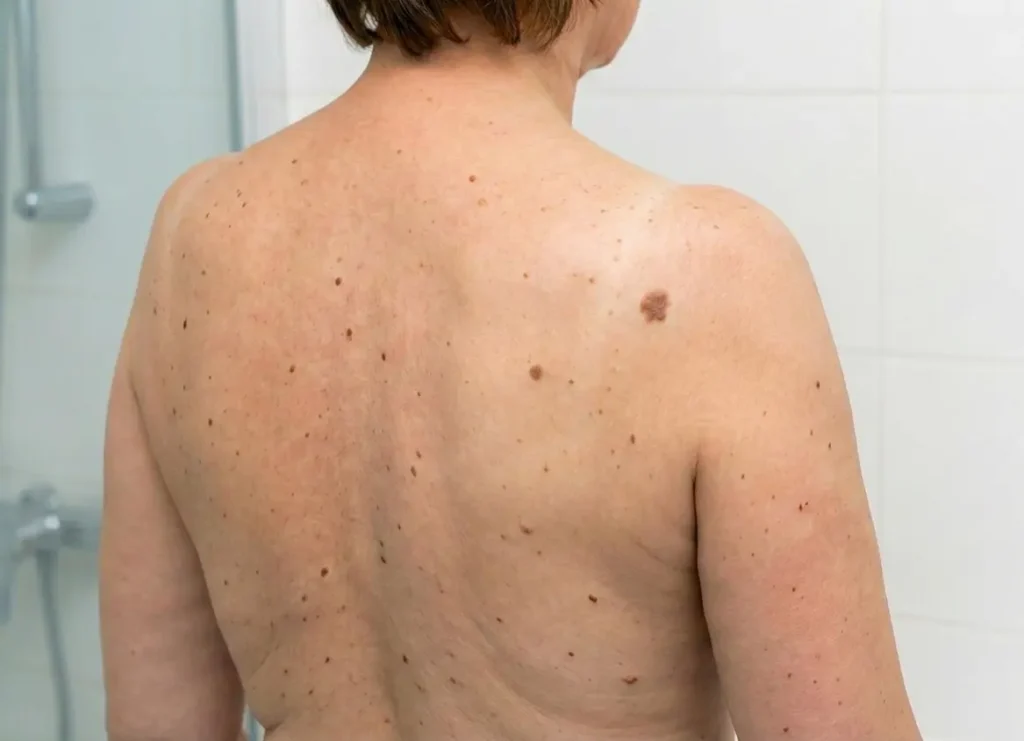
Most people have moles, and usually, those moles look like “siblings”- similar in shape and color. The Ugly Duckling Sign is a mole that stands out because it looks nothing like the others. It might be darker, larger, or a different shape. If you have one spot that looks like the “odd one out,” it’s time for a professional look.
Read More: Mohs skin cancer surgeon
2. The Scab That Won’t Heal (Non-Melanoma)
Non-melanoma skin cancers (BCC and SCC) often disguise themselves as minor injuries. Watch out for:
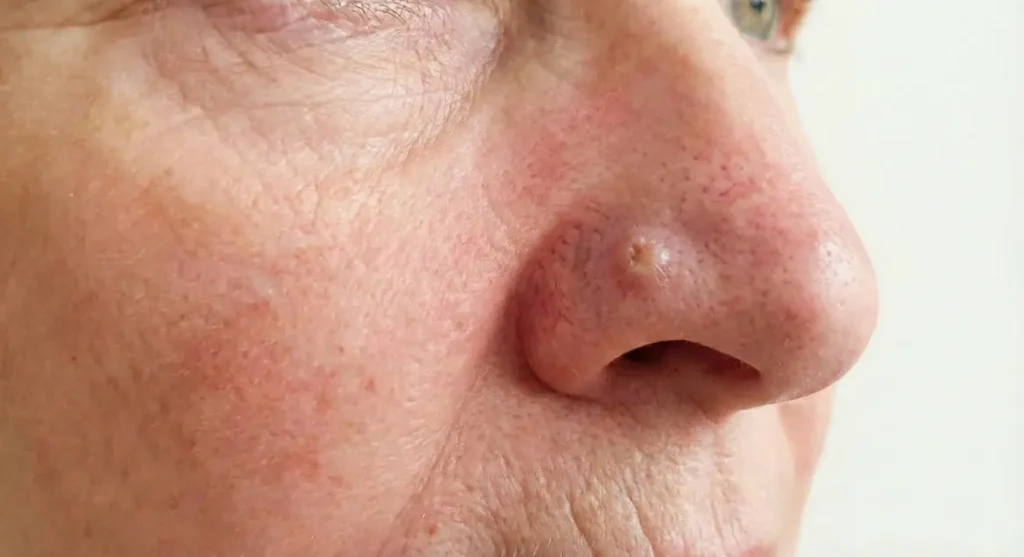
- A scab or pimple that doesn’t heal after 3–4 weeks.
- A spot that bleeds occasionally for no reason.
- A “sore” that seems to get better, then crusts over and returns.
How to Perform a Monthly Self-Exam
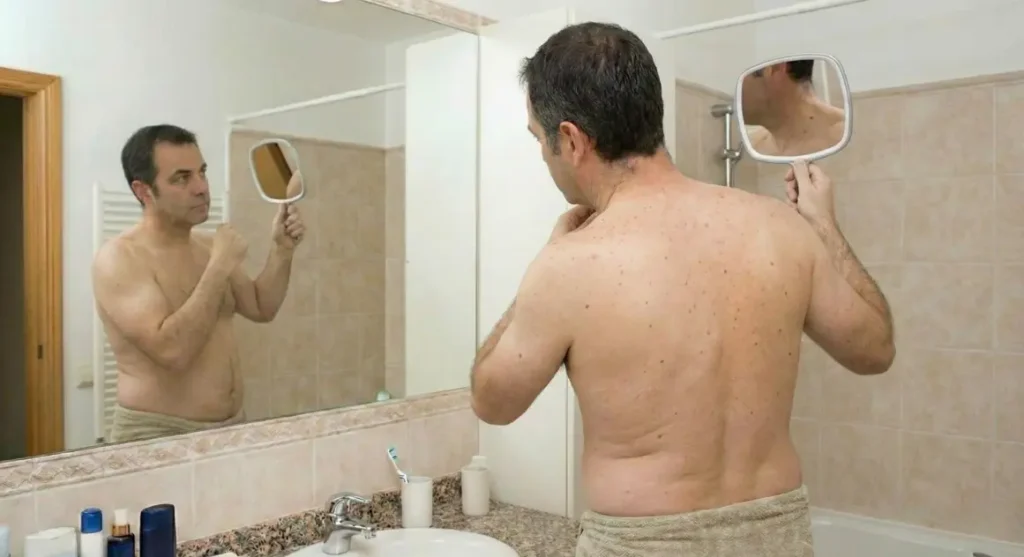
You are the expert on your own skin. We recommend performing a self-skin exam once a month. The best time is in the bathroom before you get dressed.
The Mirror Method: To do a thorough job, you’ll need a wall mirror and a hand mirror. Don’t skip these often-missed areas:
- The Back and Buttocks: Use the hand mirror while facing away from the wall mirror to get a clear view.
- Backs of the Legs: Check from your calves all the way up to your thighs.
- The Scalp and Feet: Use a comb to part your hair and don’t forget to look between your toes!
Who is at Higher Risk for Skin Cancer?
While anyone can develop skin cancer, certain factors can increase your risk significantly:
- The Impact of Sunburns (Melanoma Risk): Intense, blistering sun exposure is a major driver for melanoma. Five or more blistering sunburns between ages 15-20 can increase melanoma risk by 80%. Just one blistering sunburn in childhood doubles the chance of developing melanoma later.
- Chronic UV Exposure (Non-Melanoma Risk): Low-grade, chronic UV radiation (from daily activities or working outdoors) significantly increases the risk of BCC and SCC. Studies indicate that cumulative lifetime UV exposure is the primary predictor for Squamous Cell Carcinoma.
- Physical Traits & Genetics: Fair skin, light eyes, or a history of freckles. Family history of melanoma or having many atypical nevi (unusual moles) increases risk.
- Medication & Sun Sensitivity: Drugs like Hydrochlorothiazide (blood pressure) are “sun sensitizers,” making skin more vulnerable.
- Immunosuppression: Conditions like Lymphoma, Leukemia, or taking medications for autoimmune diseases (Rheumatoid Arthritis, Psoriasis) weaken the immune system’s ability to fight early cancer cells.
Prevention and Sun Safety Strategies
Protecting your skin is the most effective way to lower your risk. Small daily habits make a massive difference:
- SPF 30 or Higher: Apply broad-spectrum sunscreen every day to all exposed skin.
- Dress Wisely: Wear protective clothing and broad-brimmed hats.
- Seek Shade: Avoid direct sun during peak hours (10:00 AM to 4:00 PM).
Your Next Steps
Early detection saves lives. If you find an “Ugly Duckling” or a spot that just won’t heal, don’t wait for your annual check-up.
It is recommended that people with a family history of melanoma, many atypical moles, or a personal history of skin cancer see a dermatologist for regular complete mole checks.
FAQ
Basal Cell Carcinoma (BCC) is the most common form, with about 3.6 million cases diagnosed annually in the U.S.
Look for the “Ugly Duckling” sign—a mole that stands out because it is darker, larger, or a different shape than your other moles.
We recommend performing a self-skin exam once a month. Use a mirror to check your back, scalp, and even between your toes.
Yes. Just one blistering sunburn in childhood or adolescence can more than double your chances of developing melanoma later in life.
A scab, pimple, or sore that doesn’t heal after 3–4 weeks, or bleeds occasionally without reason, can be a sign of non-melanoma skin cancer (BCC or SCC).
Yes. Certain medications, such as Hydrochlorothiazide (for blood pressure), act as “sun sensitizers” and make your skin more vulnerable to UV damage.
Yes, when detected at a localized stage (early), the 5-year survival rate for melanoma is over 95%.
Yes. Chronic, low-grade UV exposure from working outdoors is a primary predictor for Squamous Cell Carcinoma (SCC).
Individuals with a family history of melanoma, many atypical moles, a history of dysplastic nevi, or a personal history of skin cancer should have regular professional checks.
Consistency is key. Use SPF 30+ broad-spectrum sunscreen daily, wear protective clothing/hats, and seek shade between 10:00 AM and 4:00 PM.