Mohs Surgery for Skin Cancer in Chaska, MN Triple Board-Certified Expertise and Fast Results for Patients Across the Twin Cities Region

Schedule an Appointment

When you have a skin cancer diagnosis, you deserve peace of mind as quickly as possible.

Skin cancer on the face requires a surgeon who prioritizes both cure and aesthetics. Dr. Kamruz Darabi is triple board-certified in Dermatology, Mohs Micrographic Surgery, and Dermatopathology—a rare distinction that, to our knowledge, makes him the only surgeon in Minnesota with this expertise. At Darabi Dermatology, we specialize in Mohs surgery for skin cancer, providing immediate microscopic results and ensuring your cancer is fully removed before you leave our clinic.

Meet Dr. Darabi Best of Carver County 2025, American Academy of Dermatology, Minnesota Monthly 2026 Top Doctors

Why Patients Choose Darabi Dermatology for Mohs Skin Cancer Surgery

4,400+ Mohs Surgeries

Performed and counting as of 2026
Triple Board-Certified

Dermatology, Mohs Surgery & Dermatopathology

Immediate Pathology Examination

Results within an hour as you wait, no outside lab delays

Appointments within 1–2 Weeks

Not months

What Is Mohs Surgery for Skin Cancer?

Mohs micrographic surgery is the gold standard for treating high-risk skin cancers, particularly those located on the face, ears, and hands. Performed as an outpatient procedure under local anesthesia, this specialized technique allows the surgeon to remove the tumor one precise layer at a time. Unlike traditional methods, the surgeon immediately examines 100% of the tissue margins under a microscope in our on-site lab while the patient waits. If any cancer cells remain at the edge, another thin layer is removed only where the roots are present, sparing as much healthy tissue as possible. This process is repeated until the margins are confirmed clear.

The primary distinction between standard excision and Mohs micrographic skin cancer surgery lies in the margin analysis. In a standard excision, a pathologist typically samples only about 1% to 5% of the surgical margin. In contrast, Mohs micrographic surgery evaluates 100% of the peripheral and deep margins. This exhaustive microscopic mapping is why Mohs surgery achieves unparalleled cure rates of 97–99% for basal cell carcinoma (BCC) and squamous cell carcinoma (SCC), the most common forms of skin cancer.

As a premier dermatology and Mohs surgery skin cancer center, we combine advanced Mohs micrographic surgery with elite-level pathology to ensure the highest level of precision and peace of mind for our patients.

At Darabi Dermatology, we provide a unique advantage: Dr. Darabi is triple board-certified. While many dermatologists perform the procedure, most are not board-certified in Mohs surgery AND dermatopathology. Because Dr. Darabi is a specialist in both the surgery and the pathology, he is uniquely qualified to serve as both the surgeon and the microscopic examiner. This means the entire process—from the initial incision to the final microscopic confirmation—is controlled by the same expert in a single visit.

When Is Mohs Surgery the Right Choice for Skin Cancer?

Determining the most effective treatment for skin cancer depends on the type, location, and behavior of the tumor. Because Dr. Darabi is triple board-certified, he evaluates every case through the dual lens of a surgeon and a dermatopathologist. This ensures that only the most appropriate cases are selected for Mohs micrographic surgery, maximizing cure rates while minimizing scarring and cost.

Ideal Candidates for Mohs Micrographic Surgery

Mohs surgery is specifically designed for cases where high-precision removal is vital. You are likely a candidate if you have:

Cancers in sensitive areas

Tumors on the face, eyelids, nose, lips, ears, scalp, or hands, where preserving healthy tissue is critical for function and appearance.

Complex tumor features

Cancers with poorly defined borders, aggressive growth patterns, or those that have recurred after previous treatments.

Specific health factors

Patients who are immunocompromised, such as organ transplant recipients, who require the highest possible cure rate.

You’re in Good Hands at Our Dermatology and Mohs Surgery Skin Cancer Center

We primarily utilize Mohs micrographic skin cancer surgery for the two most common forms of skin cancer:
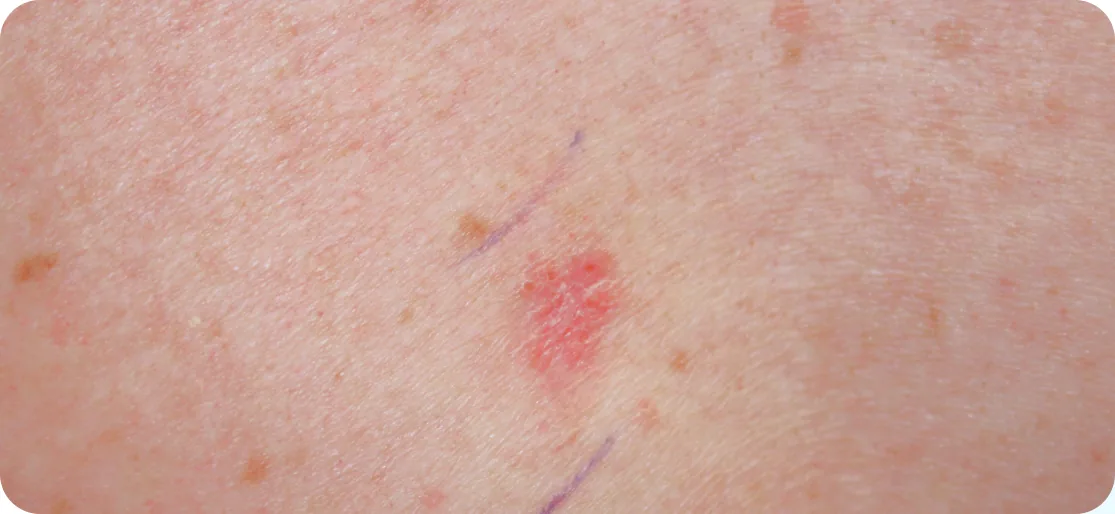
Basal Cell Carcinoma (BCC)

Basal Cell Carcinoma (BCC)

Often appearing as a pearly, shiny bump or a non-healing sore.
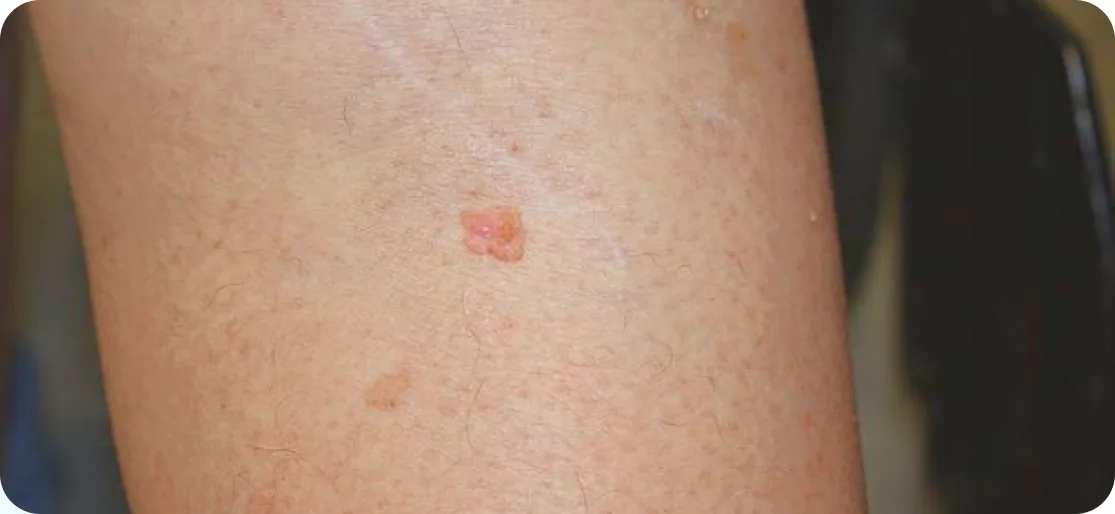
Squamous Cell Carcinoma (SCC)

Squamous Cell Carcinoma (SCC)

Often presenting as a scaly red patch or a firm nodule.

When Is Mohs NOT Indicated?

To ensure the most efficient care, Mohs is typically not recommended for small, low-risk lesions on the trunk or extremities (like the back or legs) that have well-defined borders. In these instances, standard excision or other localized treatments are often more appropriate.

A Step-by-Step Look at Your Mohs Surgery Procedure

Understanding the process of Mohs micrographic surgery can significantly ease the anxiety many patients feel. At Darabi Dermatology, we prioritize a transparent, efficient experience. Because Dr. Darabi is triple board-certified, your surgery and microscopic analysis happen seamlessly in one location, often concluding in just a few hours.

Consultation and Mapping

Dr. Darabi begins by examining the treatment site and reviewing your pathology report and medical history. He then marks the area to be removed and creates a precise tissue "map." This map serves as a permanent reference to ensure every millimeter of the tumor is accounted for during the procedure.

Local Anesthesia

The surgical site is numbed using a local anesthetic injection. You will remain fully awake and comfortable throughout the day—general anesthesia is not required. Many of our patients enjoy engaging in light conversation or listening to music during this time.

First Layer Removal

Once numbed, a thin, precisely mapped layer of cancerous tissue is removed. Dr. Darabi uses a specific bevel cut during this stage, which is essential for ensuring that 100% of the tissue margin can be examined microscopically, rather than just spot-sampled.

In-House Microscopic Examination

The removed tissue is immediately processed in our in-house lab. As a board-certified Mohs surgeon and dermatopathologist, Dr. Darabi examines the slides himself. This eliminates the need to send samples to an outside lab, ensuring the highest level of accuracy and speed.

Additional Stages (If Needed)

If the microscopic exam shows cancer cells remaining at any margin, Dr. Darabi refers back to his map to remove another thin layer only in that specific area. Most Mohs skin cancer surgery cases are cleared within one to three stages.

Wound Repair and Recovery

Once clear margins are confirmed—often within an hour of the final stage—Dr. Darabi performs the wound repair. Depending on the location, this may involve stitches, a skin flap, or a skin graft. In most cases, you will go home the same day with simple wound care instructions and the peace of mind that your cancer is gone.

Why Choose Dr. Darabi for Advanced Dermatology and Mohs Surgery in the Twin Cities Area?

Selecting a surgeon for skin cancer is a significant decision. At Darabi Dermatology, we provide a level of specialized expertise that is exceptionally rare, ensuring your care is handled by a single, highly qualified expert from diagnosis through recovery.

Schedule an Appointment

Which Skin Cancer Treatment Is Right for You?

Choosing the right surgical approach is essential for balancing a high cure rate with the best cosmetic outcome. While both procedures are performed under local anesthesia in our clinic, they differ significantly in how the margins are evaluated and the time required for the procedure.

Mohs micrographic surgery is a specialized technique where the surgeon acts as the pathologist, examining 100% of the tissue margins while you wait. This provides the highest possible cure rate and is the gold standard for the face and other sensitive areas such as hands, ears, scalp, and neck. In contrast, standard excision involves removing the tumor with a wider safety margin and sending it to an external lab. While faster on the day of surgery, it only samples a fraction of the margin, making it better suited for low-risk areas like the trunk or legs.

Feature Mohs Micrographic Surgery Standard Surgical Excision
Margin Examination 100% of margins examined ~5% of margins sampled
Best For Face, scalp, ears, and high-risk areas Low-risk lesions on trunk or limbs
In-House Pathology Yes (Immediate results) No (Sent to external lab)
Cure Rate 97–99% 85–92%
Anesthesia Local anesthetic Local anesthetic
Procedure Time Typically a half-day Approximately 45 minutes

Not every skin cancer requires Mohs. Our team will help you determine the right procedure during your consultation.

Mohs Surgery Recovery: What to Expect After Your Procedure

Recovery from Mohs surgery is typically straightforward, with most patients resuming light daily activities within 1–2 days. Because the procedure is performed under local anesthetic, you will be able to drive yourself home and begin your recovery immediately.

Practical Aftercare Steps

It is normal to experience mild swelling, bruising, or temporary numbness around the site. While redness and tightness are common initially, these will gradually diminish over several months as the scar matures.

To ensure the best cosmetic result and minimize the risk of infection, follow these guidelines:

Wound Care

Keep the surgical site clean and dry for the first 24 hours. Afterward, clean the wound daily with soap and water, apply a layer of Vaseline (petroleum jelly), and cover it with a fresh bandage.

Suture Removal

Depending on the location of your surgery, self-dissolving stitches may be used or your stitches need to be removed in 5–14 days.

Activity Restrictions

Avoid strenuous exercise, heavy lifting, and alcohol for the first week to prevent bleeding or swelling.

Long-Term Care

Once you have been diagnosed with skin cancer, you are at a higher risk for developing others. Regular head-to-toe skin cancer screenings at our clinic are essential for ongoing recurrence monitoring and early detection of other skin cancers.

What Our Patients Say About Their Mohs Surgery Experience

Google
4.9 (243)

I was referred to Darabi Dermatology after basal cell carcinoma was found on my forehead and I was in need of Mohs Surgery. From my pre-op, to my actual surgery, I couldn't be more happy with the service the Darabi team provided. They were quick to get me in for an appointment, walked me through every step, and when it was the day of the surgery and I was a little nervous, the team was so nice and calming, and made me feel so comfortable throughout the entire process.

They were an absolute joy to work with! I have been recommending them to all friends and family even if it is just to schedule their annual full body checks. Highly recommend!

A.K. Real Patient Review

Moving from Arizona to Minnesota, I wasn’t here three weeks and I found a very suspicious spot on my forehead. I am not a stranger to derm because of my fair complexion and years in the sun. I was referred to [them] by a patient of [theirs] and I’m so grateful I found [them]. It turns out I do have to have Mohs Surgery.

While, I was initially very concerned. I was quickly set at ease by a kind caring, concern staff while I was in the clinic. I felt like I knew the staff my whole life! I can tell I have found my forever derm clinic.

K.C. Real Patient Review
01 — 02

Frequently Asked Questions About Mohs Surgery for Skin Cancer

Schedule Your Mohs Surgery Consultation at Darabi Dermatology in Chaska, MN

Don’t let the anxiety of a skin cancer diagnosis linger due to long wait times. While many Twin Cities practices have month-long backlogs, Darabi Dermatology prioritizes your peace of mind with consultation availability typically within 1–2 weeks.

Benefit from the precision of a triple board-certified expert in dermatology, Mohs surgery, and dermatopathology. Take the first step toward curing skin cancer and receive expert care today. Call (952) 395-6850 or use our convenient online tool to schedule your consultation appointment at our Chaska or Hutchinson locations.