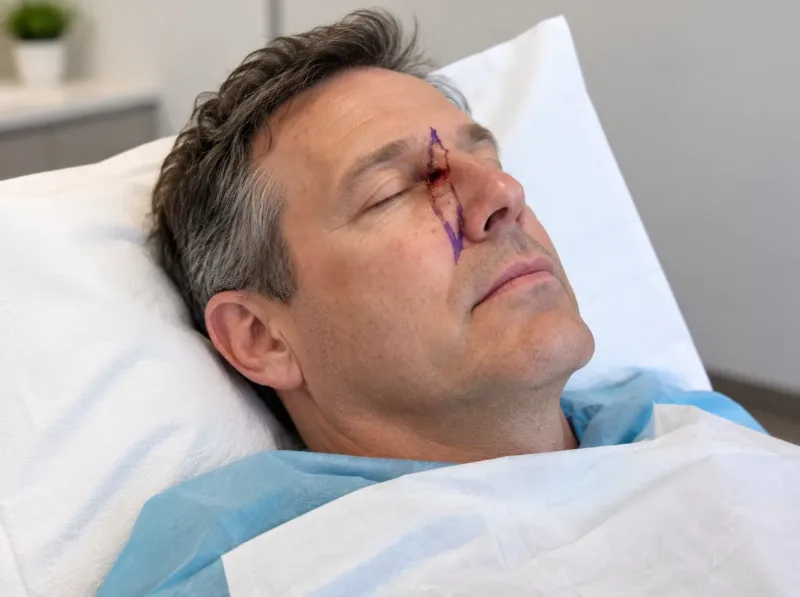
By Kamruz Darabi, MD, FAAD, FASMS Triple board-certified dermatologist, Mohs skin cancer surgeon, and dermatopathologist at Darabi Dermatology, serving Chaska and Hutchinson, Minnesota.
If you’ve had Mohs surgery, or you’re preparing for it, you probably want one simple number: how long until this is over? The honest answer is that healing happens in stages, not all at once. Your wound fully closes on one timeline, your stitches come out on another, and your scar keeps quietly improving for months after that. Knowing what to expect at each stage can make recovery feel a lot less uncertain.
The Timeline at a Glance
For most patients, here’s what recovery looks like:
Sutures removed:
Sutures are usually removed 5 to 10 days after surgery.
Full initial wound healing:
After your sutures are removed, your wound will still look elevated and red. For the redness and swelling to settle down, it takes about 4 to 6 weeks for smaller wounds, often on the face. Larger wounds, or ones on the scalp, back, hands, or feet, can take closer to 8 to 10 weeks.
Scar maturation:
Complete healing of the scar takes place over 3 to 12 months.
That last point surprises a lot of people. Your wound may look closed within a week or two, but the scar itself keeps remodeling, getting smaller and fading for the better part of a year.
What Affects How Long Your Healing Takes
No two Mohs patients heal on exactly the same schedule. A few things make the biggest difference:
Wound size and location.
Smaller, sutured incisions tend to heal up and close in about 1 week. Larger sutured wounds may take up to 2 weeks. Areas with thinner skin and less blood flow, like the lower legs, generally take longer than the face.
How the wound was closed.
Some wounds are stitched shut right away. Others are left to heal in on their own, a process called healing by secondary intention, which can take 3 to 5 weeks. In some cases, your surgeon may use a skin flap or graft to close a larger defect, and the timing and extent of that reconstruction can also affect how long healing takes. A skin flap, where adjacent skin is moved into the wound to close the wound, heals generally within 10 to 14 days. A skin graft, where skin is taken from a distant site and transferred into the wound, takes around 3 weeks to heal.
Your overall health.
Certain factors are known to slow wound healing, including smoking, diabetes, poor nutrition, and some medications such as prednisone.
How closely you follow aftercare instructions.
Keeping the wound clean, changing bandages as directed to maintain a clean and moist wound environment, and avoiding activities that stretch and stress the site all support faster, smoother healing.
Mohs Surgery Recovery, Stage by Stage
First 24 to 48 hours:
Your bandage stays on, and you’ll want to keep activity light. Avoid strenuous activity, heavy lifting, bending, and exercise that significantly raises your heart rate during this window. Avoid alcohol as it could thin your blood and increase your risk of bleeding. Some swelling and mild discomfort are completely normal. Icing and taking acetaminophen is usually sufficient.
Days 2 to 10:
You’ll begin daily wound care, typically gentle cleansing, ointment, and a fresh bandage. Sutures are usually removed 5 to 10 days after surgery, and many practices ask patients to continue wearing a bandage for 10 to 14 days depending on the location and complexity of the wound.
Weeks 2 to 6:
This is when most smaller wounds finish healing. You may notice some redness or a slightly raised, firm texture around the site. That’s part of normal healing, not a sign something is wrong.
Months 3 to 12:
Your scar continues to mature long after the wound itself has closed. Especially during the first few months, the site may feel thick, swollen, or lumpy, and there may be some redness. This gradually softens and fades. Gentle massage of the area, starting about 1 month after surgery, can help speed this part of the process. Scars generally contract and get smaller during this maturation period and can shrink as much as 50% in size.
Tips for Supporting a Smooth Recovery
- Keep the wound clean by using soap and water on the area and follow your bandage-change instructions exactly as given
- Protect the healing area from sun exposure, even after it closes
- Hold off on strenuous exercise for about 2 weeks, or as long as your surgeon recommends
- Avoid smoking, which can noticeably slow wound healing
- Ask your provider when it’s appropriate to begin gentle scar massage
- Generally, after 2 weeks when sutures are removed or have dissolved and the wound has closed, you may use silicone gel during the day and silicone sheets overnight to speed up scar maturation and improve the appearance of a scar. These products are readily available over the counter or online.
When to Call Your Dermatologist
Most Mohs recoveries go smoothly, but it’s worth knowing the signs that warrant a call:
- Increasing pain, redness, swelling, or warmth at the site are signs of surgical site infection
- Pus, a foul odor, or fever
- Bleeding that doesn’t stop with gentle, steady pressure for twenty minutes with an ice pack wrapped in a towel
- Sutures coming loose earlier than expected
When in doubt, it’s always better to check in than to wait it out.
Frequently Asked Questions
How long does it take for a Mohs surgery wound to fully heal?
Most smaller, stitched-up wounds heal within 1 to 2 weeks. Wounds left to heal by themselves, also known as healing by second intent, can take 4 to 6 weeks with proper wound care.
When are stitches removed after Mohs surgery?
Sutures are typically removed 5 to 10 days after surgery, though your provider will confirm the exact timing based on your wound.
Is it normal for a Mohs surgery scar to still look red or feel lumpy months later?
Yes. Scars commonly feel thick, swollen, or lumpy in the first few months and can take 3 to 12 months to fully mature and fade.
Can I exercise after Mohs surgery?
Light activity is generally fine after the first 48 hours, but strenuous exercise should be avoided for about a week, or longer if your surgeon advises it. Patients on prescription blood thinners are encouraged to avoid heavy lifting and exercise for up to 4 days to prevent bleeding from the wound.
Does smoking affect Mohs surgery healing time?
Yes. Smoking, along with conditions like diabetes, is known to slow wound healing and may extend your recovery timeline.
When should I call my dermatologist during recovery?
Contact your provider if you notice increasing pain, redness, swelling, pus, fever, bleeding that won’t stop, or sutures coming loose early.
Mohs surgery has one of the highest cure rates of any skin cancer treatment, and healing is a gradual, well-understood process. Your timeline will depend on your wound’s size, location, and your own health, but most patients are largely healed within a matter of 1 to 2 weeks, with scars continuing to improve for months afterward.
If you’re recovering from Mohs surgery and have questions about how your wound is healing, or you’re due for a skin check and haven’t scheduled your Mohs procedure yet, the team at Darabi Dermatology is here to help guide you through every stage of the process.