By Kamruz Darabi, MD, FAAD, FASMS Triple board-certified dermatologist, Mohs skin cancer surgeon, and dermatopathologist at Darabi Dermatology, serving Chaska and Hutchinson, Minnesota.
Learning you need surgery for a skin cancer on your face brings a specific kind of worry most other diagnoses don’t. Beyond treating the cancer itself, there’s an immediate concern about how your face will look afterward. This is exactly why Mohs surgery has become the preferred approach for facial skin cancers — it’s designed with both complete cancer removal and cosmetic preservation in mind.
Here’s what the Mohs procedure on the face actually involves, what recovery looks like, and what realistic outcomes tend to be.
Why Mohs Surgery Is Often Recommended for the Face
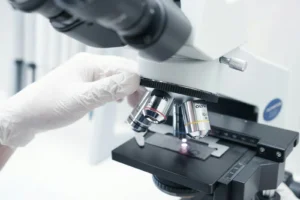
Mohs micrographic surgery removes skin cancer one thin layer at a time, examining each layer under a microscope before deciding whether to remove more tissue. This layer-by-layer approach means only cancerous tissue is removed — nothing more — which is exactly why it’s so often chosen for facial cancers.
The face includes areas where preserving healthy tissue matters enormously, both functionally and cosmetically: the nose, eyelids, lips, and ears. Mohs surgery is particularly well-suited to:
- Tumors with poorly defined borders
- Cancers that have recurred after previous treatment
- Aggressive or fast-growing skin cancers
- Cases where preserving as much healthy tissue as possible is a priority
Because of this precision, Mohs surgery offers among the highest cure rates of any skin cancer treatment, while typically resulting in a smaller wound than traditional excision methods.
The Mohs Procedure on the Face, Step by Step
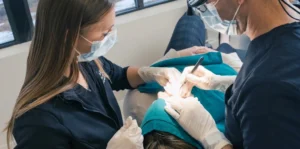
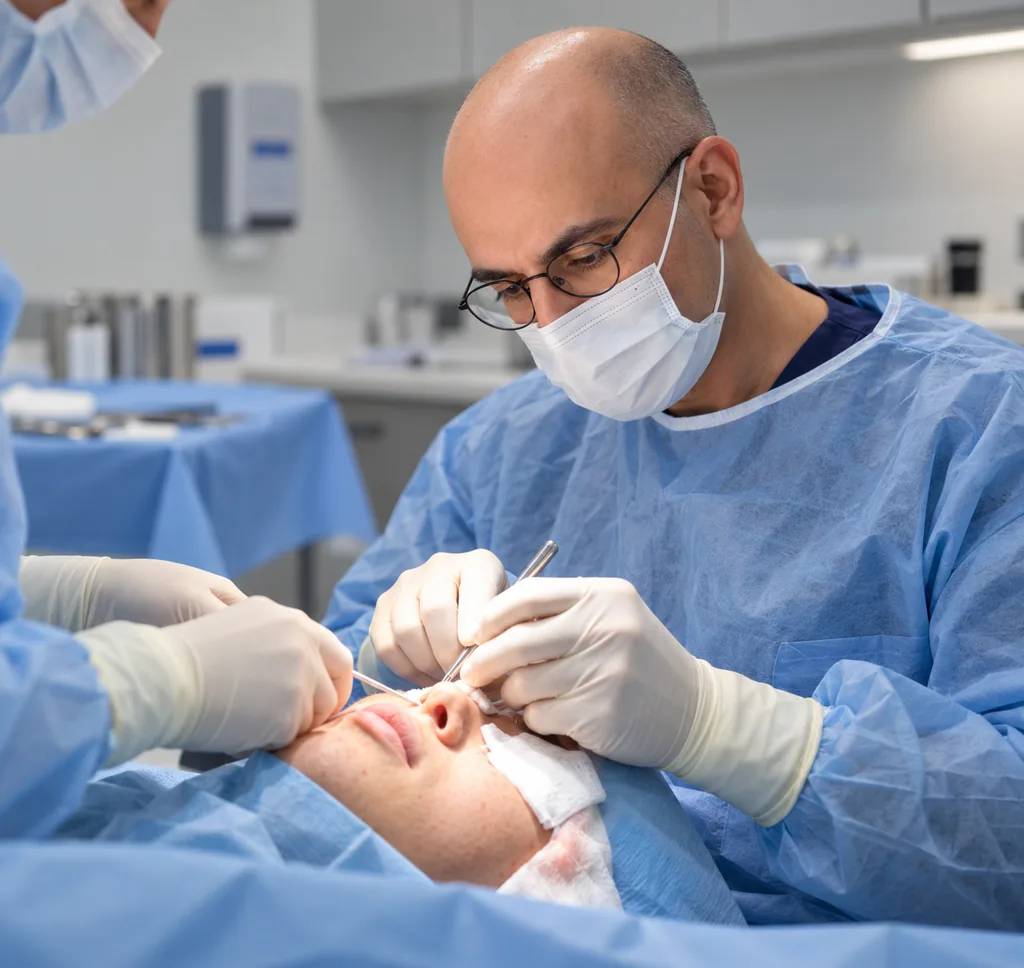
A Mohs procedure on the face is performed in stages, all within a single clinic visit, with local anesthetic:
- Preparation: Your Mohs surgeon reviews your biopsy results, examines the area, and marks the treatment site. Local anesthesia is used to numb the area completely — you’ll be awake and won’t feel any pain.
- First layer removal: A thin layer of tissue containing the visible cancer is removed.
- Microscopic examination: The tissue is processed and examined under a microscope, typically while you wait in a waiting room with a small bandage on the wound. The Mohs surgeon checks whether cancer cells remain at the edges.
- Repeat as needed: If cancer cells are still present, another thin layer is removed from the affected area only, and the process repeats until the margins are completely clear.
- Reconstruction: Once the cancer is fully removed, your Mohs surgeon discusses the best way to close the wound — which may be a simple closure, a more advanced reconstructive technique like a skin flap or graft, or occasionally healing on its own, depending on size and location.
Because the process involves waiting between stages for lab results, a Mohs appointment can take several hours, even though each individual step is quick.
What Recovery Looks Like
Healing after Mohs surgery on the face follows a fairly predictable pattern, though timing varies based on wound size and location:
- Days 1–3: Expect swelling, mild bruising, and some tenderness. A pressure bandage is typically applied and should stay in place as directed.
- Days 4–10: Swelling begins to subside. If stitches were placed, they’re often removed during this window, though timing depends on the specific site.
- Weeks 2–4: The wound continues to heal, and the area may appear pink or slightly raised — a normal part of tissue remodeling, not a sign of a problem.
- Months 1–12: The scar continues to soften, flatten, and fade. Sun protection during this entire period is essential, since new scar tissue is especially vulnerable to discoloration from UV exposure.
Most patients find recovery straightforward, though facial skin — being thinner and highly visible — understandably makes people more attentive to every stage of the process.
What to Expect Cosmetically: Before and After
This is often the biggest question patients have before surgery: what will the area actually look like once it’s healed? The honest answer is that outcomes vary based on several factors — the size of the cancer, its exact location, your skin’s natural healing response, and how closely aftercare instructions are followed.
That said, the layer-by-layer nature of Mohs surgery generally produces smaller, more precise wounds than broader excision techniques, which tends to support better cosmetic outcomes, especially in delicate areas like the nose or eyelids. Reconstructive techniques used immediately after tumor removal are chosen to work with the natural lines and contours of the face and reduce tension on the wound, helping scars blend in more naturally over time.
Generic before-and-after photos online can be reassuring, but they can’t tell you what to expect for your specific situation. The most useful way to set realistic expectations is to review real examples and discuss your particular case directly with your Mohs surgeon during a consultation.
Aftercare Tips to Support the Best Outcome
A few habits make a meaningful difference in how well a facial Mohs surgery site heals:
- Clean the area gently as instructed, without scrubbing
- Apply any prescribed ointment and keep the area appropriately covered
- Use ice packs as directed to manage swelling in the first few days
- Pain medications are usually not necessary. You may feel some tenderness the first day or two. Over-the-counter Tylenol (acetaminophen) is typically sufficient.
- Avoid strenuous activity and skin stretching that could stress the healing site
- Protect the area from direct sun exposure for at least several months, using physical coverage rather than sunscreen alone on healing skin
- Once sutures are removed or have dissolved, use an over-the-counter silicone gel during the day and a silicone sheet overnight for two to three months. This helps improve the appearance of a surgical scar.
Following your surgeon’s specific instructions matters more than general advice, since every wound and location is slightly different.
A Precise, Well-Established Path Forward
Mohs surgery on the face has become the standard of care for a reason: it combines a high cure rate with a thoughtful, precision-based approach to preserving your natural appearance. While every case is different, most patients are surprised by how manageable the recovery process is and how well-healed scars tend to look after several months.
If you’ve been diagnosed with facial skin cancer or want to understand your options before a procedure, schedule a consultation with Darabi Dermatology. We’re happy to walk you through the process, answer your specific questions, and share before-and-after examples so you know what to realistically expect.
As a triple board-certified dermatologist, Mohs surgeon, and dermatopathologist, Dr. Darabi is uniquely qualified to care for your skin cancer.