By Kamruz Darabi, MD, FAAD, FASMS Triple board-certified dermatologist, Mohs skin cancer surgeon, and dermatopathologist at Darabi Dermatology, serving Chaska and Hutchinson, Minnesota.
Recurring acne breakouts, hormonal acne, and stubborn dark spots can make you feel uncomfortable in your own skin. Most store-bought products never reach the root of the problem, but that doesn’t mean you have to give up on your clear-skin goals.
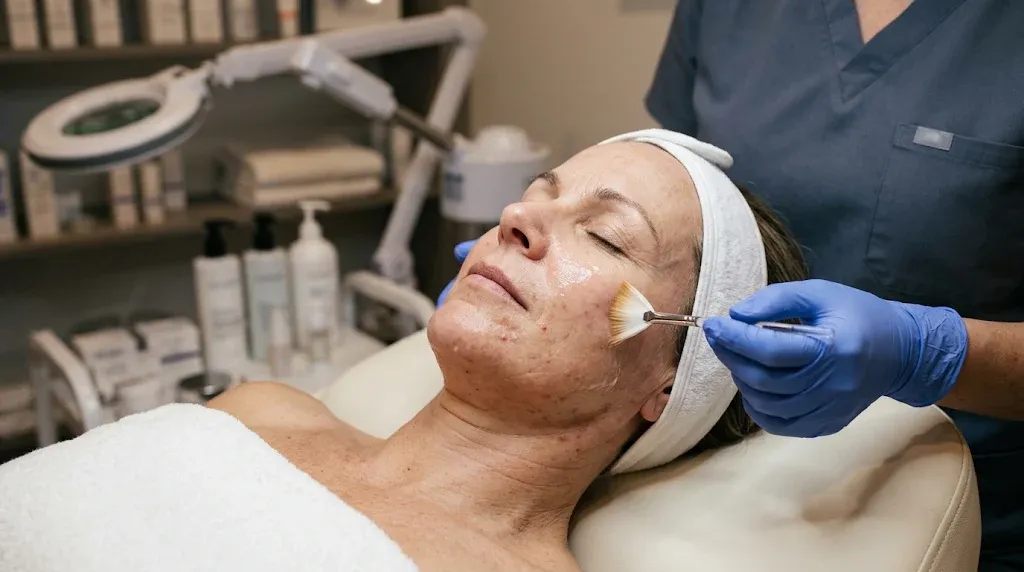
A chemical peel uses a controlled acid solution to remove damaged surface skin so healthier skin can replace it. At Darabi Dermatology, we choose medical-grade chemical peels based on a careful exam of each patient’s skin and goals.
This guide explains how peels help with acne, dark spots, melasma, pore size, and fine lines. It also covers where peels fall short and what recovery looks like, day by day.
Table of Contents
- What a Chemical Peel Does to Your Skin
- Chemical Peel Benefits Dermatologists Can Back Up
- Chemical Peels for Acne
- Chemical Peels for Dark Spots
- Chemical Peels for Hyperpigmentation and Melasma
- Chemical Peels for Wrinkles
- Advantages of Professional Chemical Peels vs. At-Home Peels
- After Treatment: A Day-by-Day Recovery Timeline
- Find the Chemical Peel That Fits Your Skin
- Frequently Asked Questions About Chemical Peels
What a Chemical Peel Does to Your Skin
A superficial peel works in three steps. First, the active ingredient acid loosens the bonds that hold damaged cells together. Next, that top layer sheds over several days. Then your skin rebuilds with fresh cells. Medium peels reach deeper, which also signals your skin to make new collagen, the protein that keeps it firm.
Peels come in three strengths. The deeper the peel, the more dramatic the change and the longer the recovery.
| Depth | Common agents | Downtime | Best for |
|---|---|---|---|
| Superficial | Salicylic, glycolic, lactic acid | 1 to 3 days | Acne, dullness, mild hyperpigmentation, mild pores |
| Medium | Higher-strength TCA | 4 to 10 days | Moderate sun damage, pigment, fine lines |
| Deep | Phenol | 2 to 3 weeks | Severe sun damage and pigment, deeper lines and wrinkles (often replaced by CO2 laser today due to better safety and faster recovery) |
Deep peels can create dramatic results but require the longest recovery time. For patients who need that level of correction, fractionated CO2 laser resurfacing treats the same concerns over several CO2 laser sessions with more control over depth, shorter recovery times, and a better safety profile.
Chemical Peel Benefits Dermatologists Can Back Up
Peels have clear limits. They don’t lift sagging skin, restore lost volume, or remove deep wrinkles. They can help control acne and melasma, but they don’t cure either condition. Research supports some peel benefits much more strongly than others. Here’s where the evidence stands.
| Benefit | Peel depth | Strength of evidence |
|---|---|---|
| Clearer pores, fewer blackheads | Superficial | Well supported |
| Calmer acne and pimple breakouts | Superficial | Supported, best with an acne plan |
| Faded sun spots and uneven tone | Superficial to medium | Well supported |
| Faded acne red and brown marks | Superficial | Supported |
| Smoother, brighter skin | Superficial | Well supported |
| Softer fine lines | Superficial to medium | Supported for fine lines only |
| Lighter melasma | Superficial | Helpful with prescription creams; relapse is common |
| Improved acne scars | Medium | Limited for pitted scars |
Chemical Peels for Acne
Salicylic acid is the go-to acne peel. It dissolves in oil, so it can reach inside clogged pores, clear them out, and calm inflammation. In a randomized trial of salicylic acid and TCA peels, both worked about equally well for mild to moderate acne, but patients tolerated salicylic acid better. Peels do the most good as one part of a complete acne treatment plan that includes prescription care.
Peels also fade the flat red or brown marks pimples leave behind. Pitted scars sit deeper in the skin and usually respond better to microneedling with or without PRP or laser treatment.
A peel won’t make a single pimple disappear overnight, and your first peel may leave your skin flaky for 1 to 3 days. If you have a special event or photo shoot coming up, book your first superficial peel at least 1 to 2 weeks ahead.
Chemical Peels for Dark Spots
Sun spots, age spots, freckles, and post-inflammatory hyperpigmentation of acne sit in the top layer of skin, which is exactly where peels do their best work. Most fade gradually over a series of chemical peel treatments. If you have a stubborn single pigmented spot, a pigment laser may clear it faster than a peel.
Before you treat any spot, you should have it checked by a doctor. Some skin cancers, including melanoma, can look like a flat brown spot. A dermatologist can biopsy it if needed and have it examined by a professional dermatopathologist. At Darabi Dermatology, we can do both steps in-house for quicker answers.
Chemical Peels for Hyperpigmentation and Melasma
Melasma is patchy brown or gray-brown pigment, usually on the cheeks, forehead, or upper lip. The condition is linked to hormones, sun, and a genetic predisposition to develop the condition. A 2024 systematic review found peels are safe and effective for melasma, with glycolic acid performing best.
Peels work best for melasma when combined with prescription skincare and daily sunscreen. Melasma tends to return, so plan on maintenance treatments.
Medium and darker skin tones can be treated safely, but irritation can trigger new dark patches. That’s why it’s important to start with gentle peels and build strength gradually.
We utilize our Ultra laser with tranexamic acid serum for a safe and effective treatment of melasma, combined with prescription-strength skin care.
Chemical Peels for Wrinkles
Chemical peels soften fine lines and enlarged pores by removing damaged surface skin. Medium peels also prompt new collagen, which helps skin look firmer over the following months. Peels can’t erase deep creases or tighten sagging skin, so the type of wrinkle determines the best treatment:
- Fine lines and enlarged pores: a strong fit for peels
- Expression lines, like frown lines and crow’s feet: Botox® or other neuromodulators like Dysport® or Xeomin® usually work better because these lines come from muscle movement
- Deeper lines, brown spots, and heavy sun damage: CO2 laser typically outperforms a peel
Advantages of Professional Chemical Peels vs. At-Home Peels
At-home peels have become popular over the years, and social media influencers promise amazing results. In reality, they are too weak to target specific concerns and are best used to help maintain results between professional treatments.
The good news is that professional peels cost less per session than many other cosmetic treatments, and appointments are quick. Superficial peels need little downtime and suit most skin types, including darker skin tones that are more prone to hyper- or hypopigmentation side effects.
After Treatment: A Day-by-Day Recovery Timeline
The recovery timeline for a chemical peel depends on its depth. Your unique biology, health status, and genetics also factor into the process. Here are some general guidelines:
Superficial peel:
- Day 0: mild redness and tightness
- Days 1 to 3: dryness and flaking, often peaking on day 2 or 3
- Days 3 to 7: flaking finishes
Medium peel:
- Days 1 to 2: swelling that builds for about 48 hours
- Days 3 to 7: darkening and peeling
- Days 7 to 14: healing finishes
During recovery, use a gentle cleanser, thick moisturizer, and sunscreen every day, and let flaking skin come off on its own with thick moisturizers, since picking can leave marks.
Find the Chemical Peel That Fits Your Skin
Chemical peels deliver the best results when the peel type and the peel depth match your skin and your goals. Book an exam at our Chaska or Hutchinson office, or self-schedule online, and take the first step toward clearer, brighter skin.
Frequently Asked Questions About Chemical Peels
What are the negatives of a chemical peel?
The most common downsides are temporary redness, flaking, sun sensitivity, and the need for several sessions. Less often, skin can darken or lighten in patches, or cold sores can flare. Scarring is rare when a dermatology clinic performs the peel.
How long do chemical peels last?
Results aren’t permanent because your skin keeps aging. Repeat superficial peels help maintain results, and medium peel results last longer. Protecting your skin from the sun every day helps any result last.
Do chemical peels work for acne?
Yes, specifically salicylic acid peels work very well for acne. Salicylic acid penetrates into clogged pores, opens them up, and is also anti-inflammatory. Many of our patients have great results with a standing monthly salicylic acid peel treatment. Especially patients who don’t want to take oral medications such as spironolactone, a birth control pill, or isotretinoin (Accutane™) have good results with monthly salicylic acid peels, including patients with young adult and middle-aged female hormonal acne.
How long after a chemical peel do you see results?
Most people see results within a week of a superficial peel and about 2 weeks after a medium peel. Acne and pigment concerns typically need a series of 2 to 3 superficial peels to notice significant improvement.
What does your face look like 3 days after a chemical peel?
Three days after a superficial peel, your skin usually feels slightly tight and flakes lightly. After a medium peel, your skin looks darker and is starting to crust and peel.
What’s the worst day after a chemical peel?
For most people, day 2 or 3 is the hardest, when tightness and flaking peak.
How much does a chemical peel usually cost?
Cost depends on the depth of the peel and the number of sessions. The Aesthetic Society reported an average of about $196 per peel in 2022, while the American Society of Plastic Surgeons reports $1,829 for skin resurfacing procedures, including deeper peels. Insurance generally doesn’t cover cosmetic peels. Our medical-grade salicylic acid peel for acne is in the range of around $100 per peel, which makes it very affordable for most patients.