By Kamruz Darabi, MD, FAAD, FASMS Triple board-certified dermatologist, Mohs skin cancer surgeon, and dermatopathologist at Darabi Dermatology, serving Chaska, Hutchinson, and the greater Minneapolis area.
When it comes to treating skin cancer, precision matters. That’s where Mohs surgery comes in—an advanced, highly effective technique that removes skin cancer layer by layer while preserving as much healthy tissue as possible. At Darabi Dermatology, we believe informed patients are empowered patients, so let’s break down what you need to know about this specialized procedure.
Table of Contents
Understanding Mohs Surgery for Skin Cancer
Why Choose Mohs Micrographic Surgery
Why Dermatologists Choose Mohs Surgery for BCC and Squamous Cell Carcinoma
Beyond BCC and SCC: Mohs Surgery for Melanoma
How Long Does Mohs Surgery Take & What to Expect on Surgery Day
Is Mohs Surgery Right for You?
Healing, Aftercare, and Scarring
After Your Surgery: The Importance of Regular Check-Ups
Understanding Mohs Surgery for Skin Cancer
Mohs micrographic surgery (named after Dr. Frederic Mohs, who pioneered the early concepts of the technique in the 1930s) is a specialized procedure used to treat specific types of skin cancer, most commonly:
- Basal cell carcinoma (BCC)
- Squamous cell carcinoma (SCC)
- Some early melanomas and other rare skin cancers
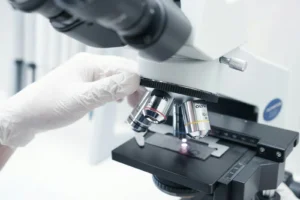
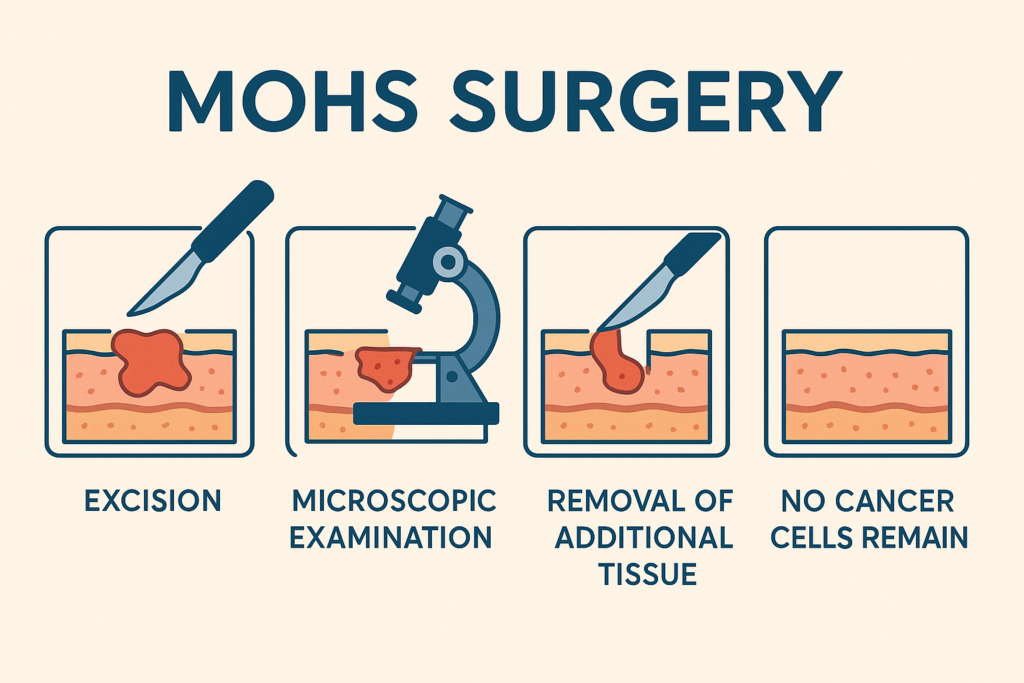
What makes Mohs unique is that it allows your surgeon to examine 100% of the peripheral and deep surgical margins under a microscope during the procedure. This immediate microscopic verification makes the procedure the gold standard for accuracy and successful cure rates.
While traditional wide local excisions require sending tissue samples away to an external lab and waiting days for results, Mohs surgery happens entirely in real-time. Your dermatologist dynamically maps the tumor and confirms that every single cancer cell is gone before your wound is closed.
Why Choose Mohs Micrographic Surgery
The goal of Mohs surgery is to remove all cancerous cells while sparing as much healthy skin as possible. This is especially important when treating areas where preserving cosmetic appearance and function is crucial, such as the face, eyelids, nose, lips, ears, and hands.
Key Benefits of Mohs Micrographic Surgery
- Highest Cure Rate: Up to 99% for primary (new) carcinoma cancers and 94% for recurrent ones.
- Tissue Preservation: Minimal margins are taken, leaving the smallest possible surgical defect.
- Same-Day, Real-Time Results: Pathology and surgery happen concurrently in a single visit.
- Minimized Recurrence Risk: Because 100% of the margin is checked, the chance of the cancer coming back in that location drops to 1-2%.
- Safer for At-Risk Patients: Because it relies entirely on local anesthesia rather than general anesthesia, it dramatically minimizes systemic risks for elderly patients or individuals with complex medical histories.
Why Dermatologists Recommend Mohs Surgery for Basal Cell Carcinoma and Squamous Cell Carcinoma
Mohs micrographic surgery is highly versatile, but it is primarily used to treat the two most common types of non-melanoma skin cancer: Basal Cell Carcinoma (BCC) and Squamous Cell Carcinoma (SCC). Each of these cancers behaves differently, and Mohs addresses their unique growth patterns.
Mohs Surgery for Basal Cell Skin Cancer
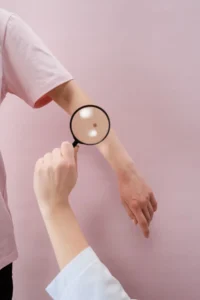
Basal cell carcinoma is the most frequently diagnosed skin cancer worldwide. It typically develops on chronically sun-exposed areas like the face, neck, and nose, often appearing as a pearly bump, a pink patch, or a sore that bleeds and won’t fully heal.
While BCCs grow slowly and rarely metastasize (spread to distant organs), they are locally destructive. If left untreated, they can quietly invade deep into the surrounding fat, muscle, and even bone. Because BCCs so frequently appear on highly visible features like the nose or eyelids, Mohs surgery is preferred. It allows the surgeon to clear the deep roots of the tumor while ensuring the surgical scar is kept as small and cosmetically inconspicuous as possible.
Mohs Surgery for Squamous Cell Skin Cancer
Squamous cell carcinoma presents an entirely different set of risks that make Mohs surgery a highly beneficial treatment option.
Unlike BCCs, squamous cell skin cancers can sometimes grow more aggressively and have a distinctly higher potential to spread downwards along unpredictable, microscopic pathways that are completely invisible to the naked eye. If an SCC is treated with a standard surgical excision, the doctor must use uniform, blind margins. This can leave hidden microscopic “roots” behind and lead to a higher rate of recurrence, or result in removing far more healthy tissue than necessary.
When performing Mohs surgery for a squamous cell cancer, your dermatologist maps out the tumor dynamically, section by section. This ensures that even the most complex, finger-like root systems of squamous cell carcinoma are fully tracked and removed. This is particularly essential for SCC tumors that display aggressive features, are larger, exhibit irregular borders, or have already recurred after a previous treatment.
Beyond BCC and SCC: Mohs Surgery for Melanoma
While the vast majority of Mohs surgery clinics treat BCC and SCC, specialized clinics use Mohs to treat melanoma in situ (Stage 0) and lentigo maligna, a type of early melanoma typically found on chronically sun-damaged skin.
Melanoma can behave highly aggressively, and atypical melanoma cells can be notoriously difficult to distinguish from normal skin cells under a microscope. However, advanced dermatological science has refined the technique by using specialized immunohistochemistry (IHC) stains. These colored stains preferentially stick to melanoma cells, making them brightly visible under the microscope and allowing Mohs surgeons to successfully treat early-stage melanomas in highly sensitive areas without resorting to overly disfiguring wide excisions. We typically refer these cases to a large referral center.
Your dermatologist will recommend Mohs surgery based on several factors, including:
- The type, size, and location of the skin cancer
- Whether the cancer is aggressive or recurrent
- Your overall health and medical history
At Darabi Dermatology, we evaluate each case individually to determine the best treatment plan for your specific needs.
How Long Does Mohs Surgery Take & What to Expect on Surgery Day
The most common questions patients ask before Mohs surgery are: “How long will it take?” and “Will I be awake during the procedure?” On average, the entire Mohs surgery process takes about 4 to 5 hours, but it can range anywhere from 2 to 8 hours depending on how far the roots of the tumor extend. Patients should prepare to spend at least a half-day at our clinic, and should not schedule any other appointment on the day of surgery in case your cancer requires multiple removal stages. While the actual surgical cutting takes only a few minutes, the vast majority of your day will be spent waiting comfortably while your tissue is processed in our on-site laboratory.
The Step-by-Step Layer Removal Process
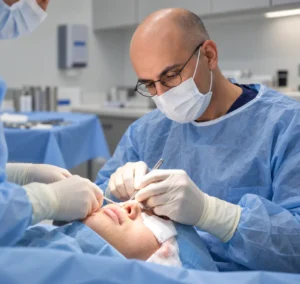
Mohs surgery is performed in-office under local anesthesia, so you’ll be awake, alert, and comfortable throughout the procedure. You are encouraged to eat a normal, healthy breakfast before arriving, take any medications you normally take, bring a snack and bottled water, and something to occupy your time.
Here is how the timeline unfolds:
- Tumor Removal: The visible portion of the skin cancer is carefully removed along with a very thin layer of surrounding tissue.
- Tissue Mapping & Analysis: The tissue slice is precisely mapped, color-coded with surgical dyes, and transferred to our on-site laboratory.
- Waiting on Real-Time Pathology Lab Results: While you relax with a book or a snack in our waiting area, your surgeon processes, flash-freezes, and examines the tissue slides under a microscope. This laboratory phase takes roughly 30 to 60 minutes per layer.
- Layer-by-Layer Removal: If cancer cells are seen at any edge of the margin, you will return to the procedure room so another precise layer can be removed only in the specific quadrant where the cancer remains. This cycle repeats until the margins are entirely clear.
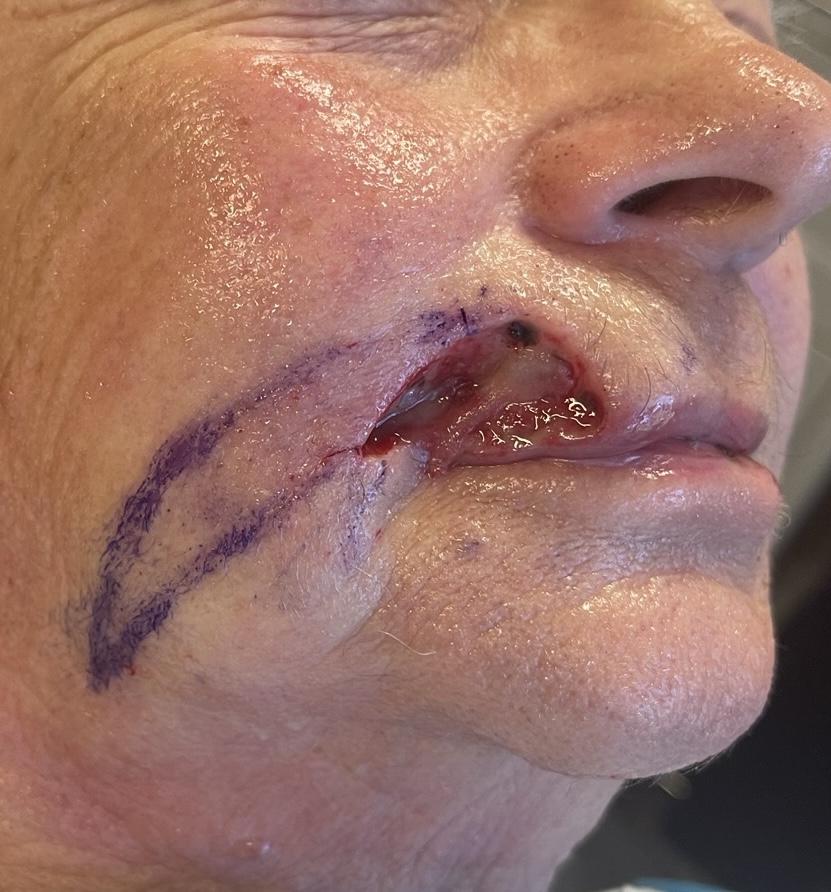
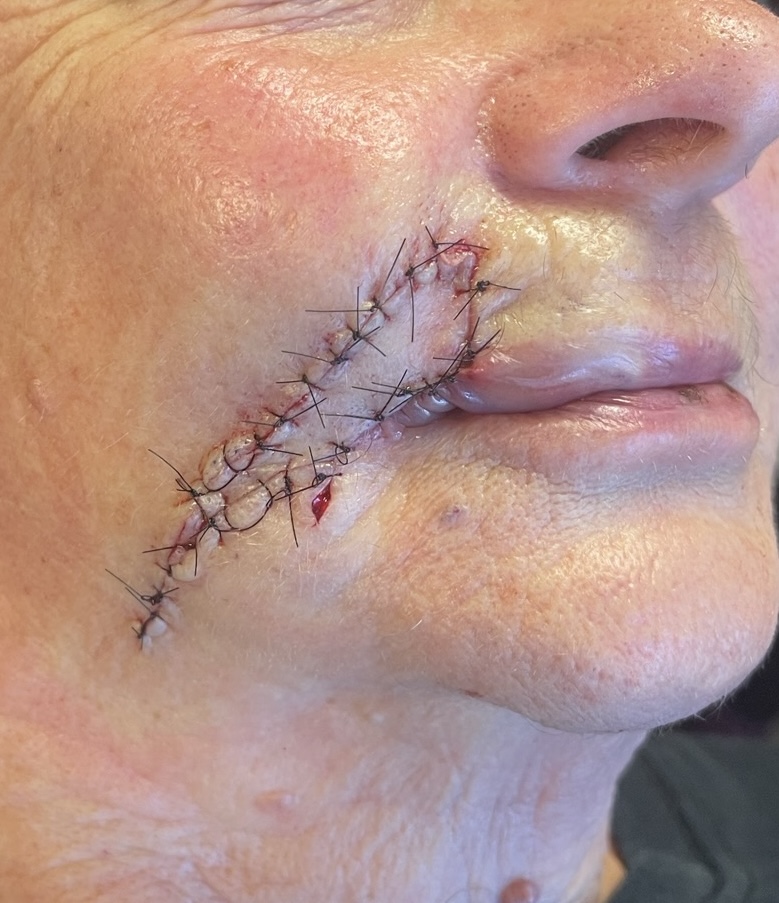
- Wound Repair and Reconstruction: Once a completely cancer-free margin is achieved, your dermatologist will discuss reconstruction options. In most cases, repair happens that very same day using stitches, a skin flap, or a skin graft. Sometimes, the repair needs to be scheduled in a few days to allow sufficient time for a skin flap or graft. In fewer than 3% of highly complex cases involving larger tumors, a patient may be coordinated with a plastic surgeon for wound repair a few days later.
Is Mohs Surgery Right for You?
Your dermatologist will recommend Mohs surgery based on several key factors, including:
- The type, size, and location of skin cancer.
- Whether the cancer is aggressive, fast-growing, or recurrent.
- Whether the tumor lacks clearly defined borders.
- Your overall health, age, and medical history.
Mohs surgery is generally not appropriate for metastatic cancers that have already spread to internal organs, or skin tumors that grow in a highly dispersed “splatter” pattern rather than a single, traceable mass.
Healing, Aftercare, and Scarring
Every form of surgical intervention results in a permanent scar, but Mohs surgery minimizes this footprint by preserving your natural tissue. To achieve a superior cosmetic outcome, your stitches may extend slightly outside the immediate boundary of the initial wound.
After the procedure, you will receive comprehensive wound care instructions:
Activity Restrictions: Minor swelling and bruising are common and usually peak around 48 hours. To protect your stitches and ensure optimal cosmetic healing, strenuous exercise, heavy lifting, or stretching of the skin of the area should be avoided for at least 1 to 2 weeks.
Pain Management: Any lingering discomfort is typically minor and can be easily managed with over-the-counter acetaminophen (Tylenol). Avoid aspirin or ibuprofen-containing medications immediately after surgery, as these can thin the blood and promote bruising or bleeding.
After Your Surgery: The Importance of Regular Check-Ups
Having one skin cancer statistically increases your risk of developing another. That’s why establishing a relationship with a trusted dermatological team is your best defense. Routine skin cancer screenings are key to catching new tumors early.
If you or someone you love has a concerning skin lesion, we are here to guide you through the process with expertise and empathy. Reach out to us at Darabi Dermatology—we will support you every step of the way.
Frequently Asked Questions About Mohs Micrographic Surgery
Is Mohs surgery painful?
The procedure itself is not painful because the surgical site is completely numbed with a local anesthetic. You will feel a brief sting during the initial numbing injection, but you will remain comfortable and awake throughout the rest of the layer-removal process. Any post-operative discomfort is usually mild and easily managed with over-the-counter pain relievers like acetaminophen (Tylenol).
Can I drive myself home after Mohs surgery?
It depends entirely on the location of your skin cancer. If the surgery is near your eyes, the local swelling or structural bandages may temporarily impair your vision. For your safety, for cases around the eye, we generally recommend arranging for a family member or friend to drive you home on the day of your procedure.
Will I have a scar after Mohs surgery?
Yes, any surgical procedure that cuts through the skin will leave a permanent scar. However, because Mohs surgery is uniquely tissue-sparing, it preserves the maximum amount of healthy skin. This ensures the resulting surgical defect is as small as possible, allowing your dermatologist to perform a precise closure that yields the best possible cosmetic outcome over time.
Can I see before and after images of Mohs surgery results?
Reviewing real clinical photos can help you visualize what to expect during the healing process and see the excellent cosmetic outcomes achieved through precise reconstruction techniques. We maintain a comprehensive gallery of real patient results that demonstrate the progression from initial tumor removal to healed scars.